Riga, the last stop
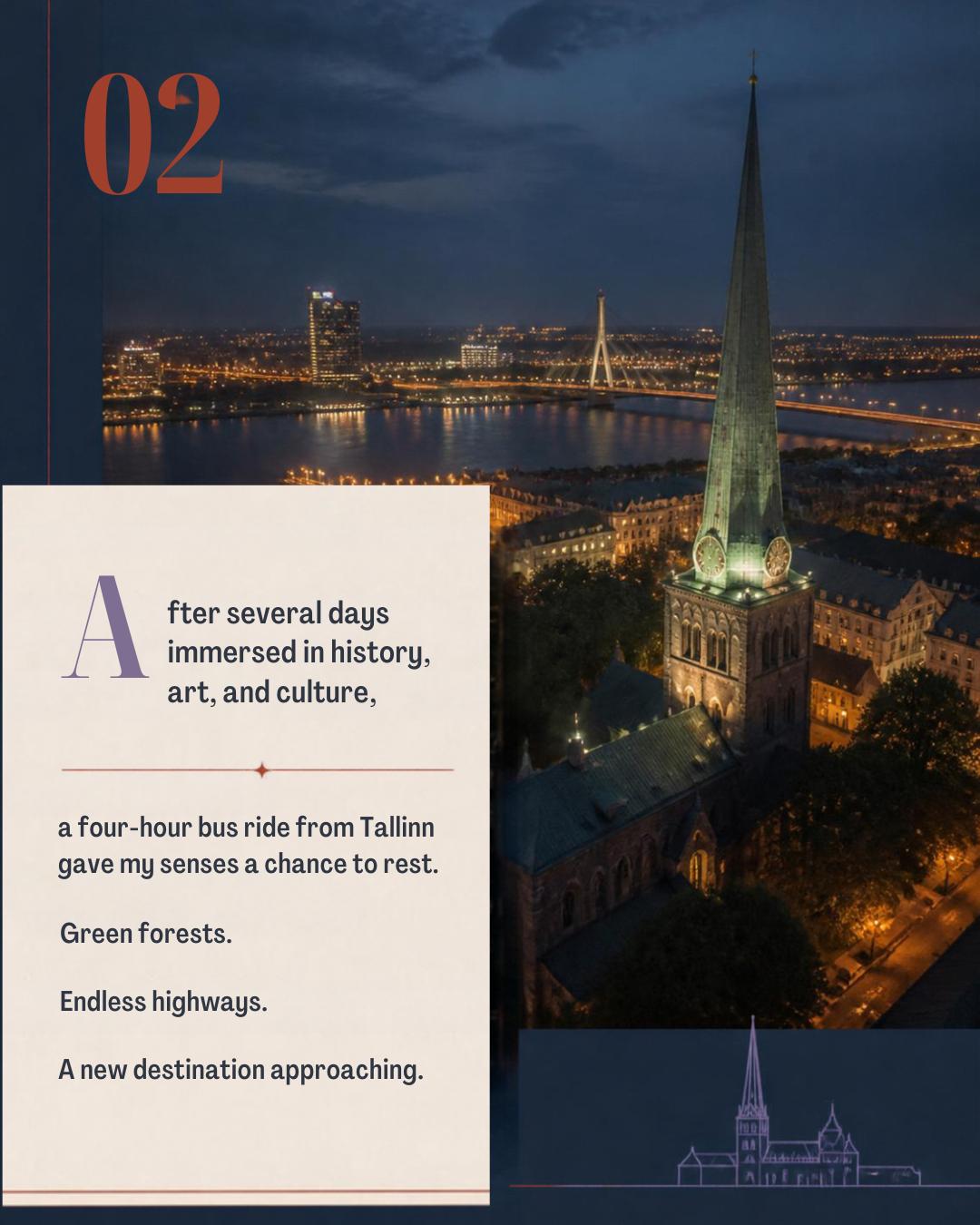
After several days immersed in history, art, and culture, a four-hour bus ride from Tallinn offered recovery not just for my legs but for my senses. Resting my eyes on the endless greenery framed by highways felt like preparing myself for the next destination.
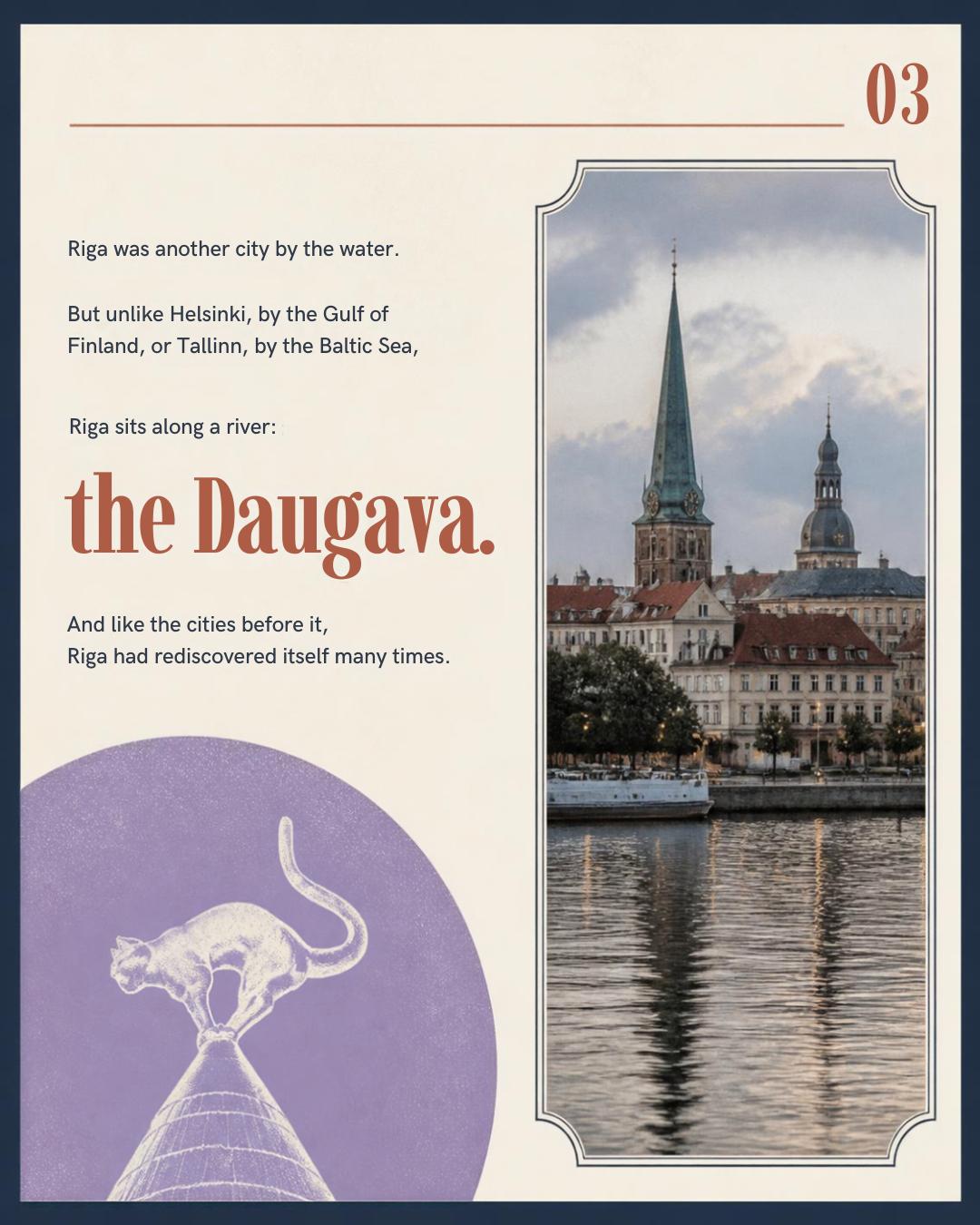
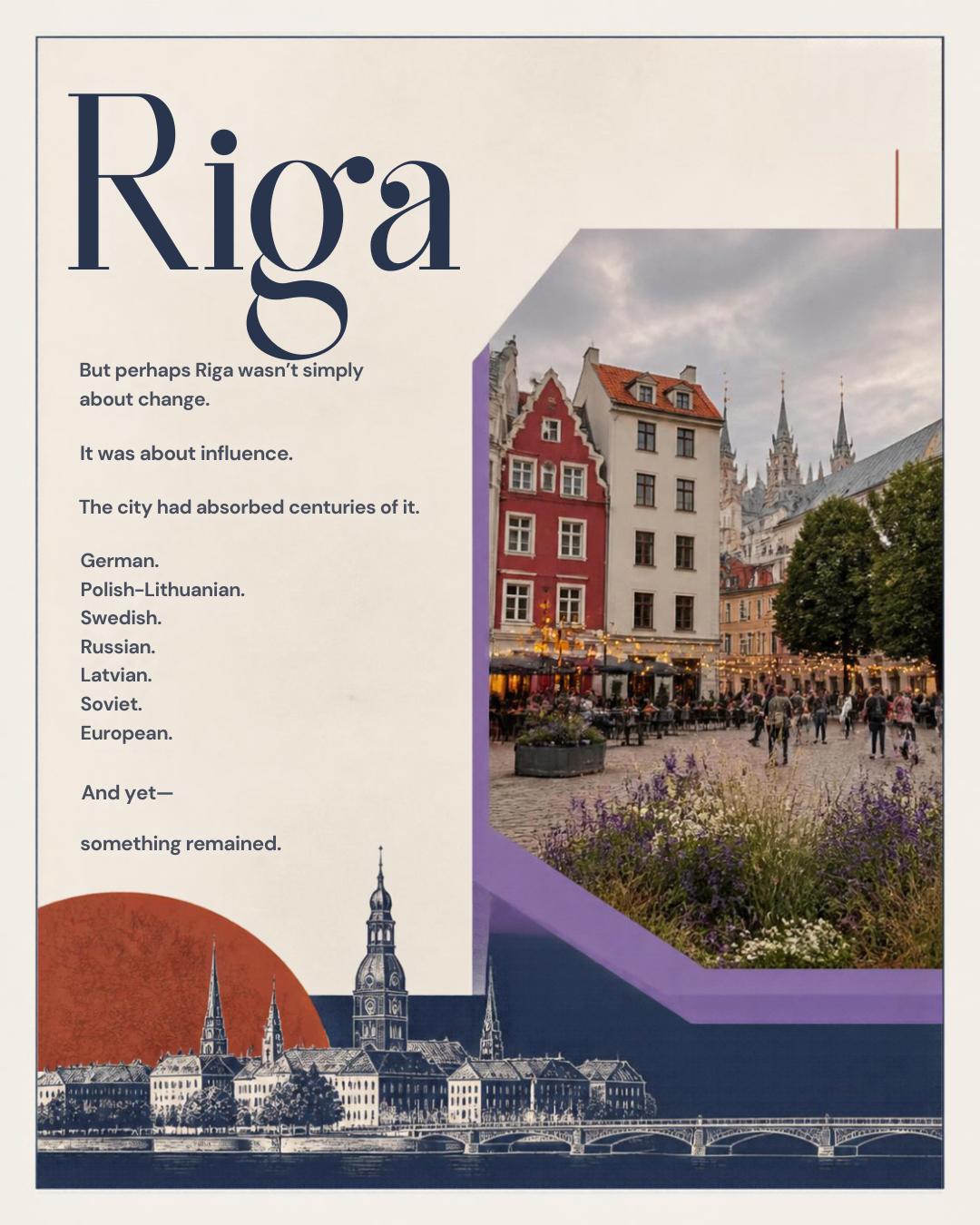
It was another trading and cultural city by the water. Unlike Helsinki, by the Gulf of Finland; or Tallinn, by the Baltic sea, this one sits along a river. Another city that had rediscovered itself again and again.
Our destination was Riga, by the Daugava River, and the city greeted us in its own way.
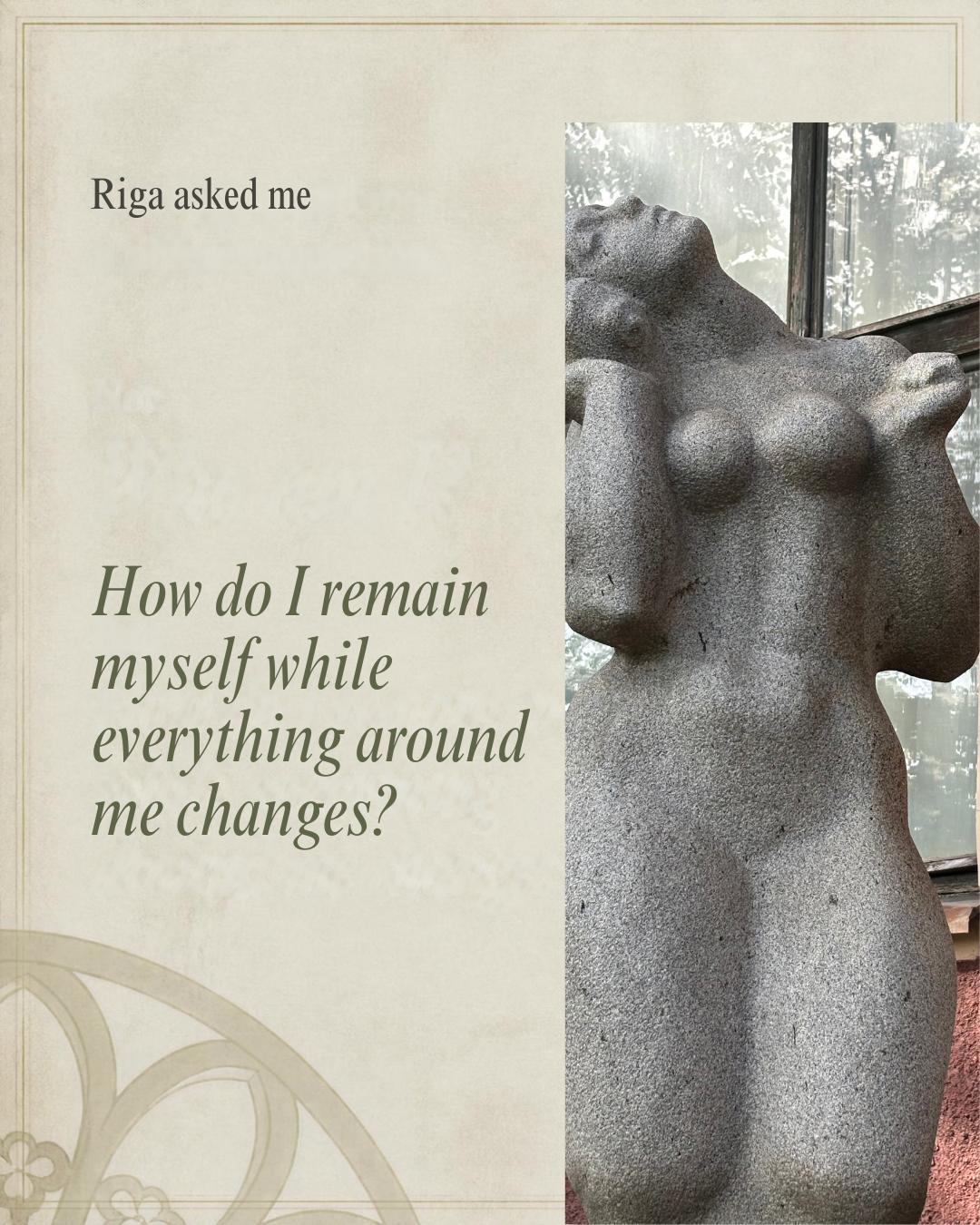
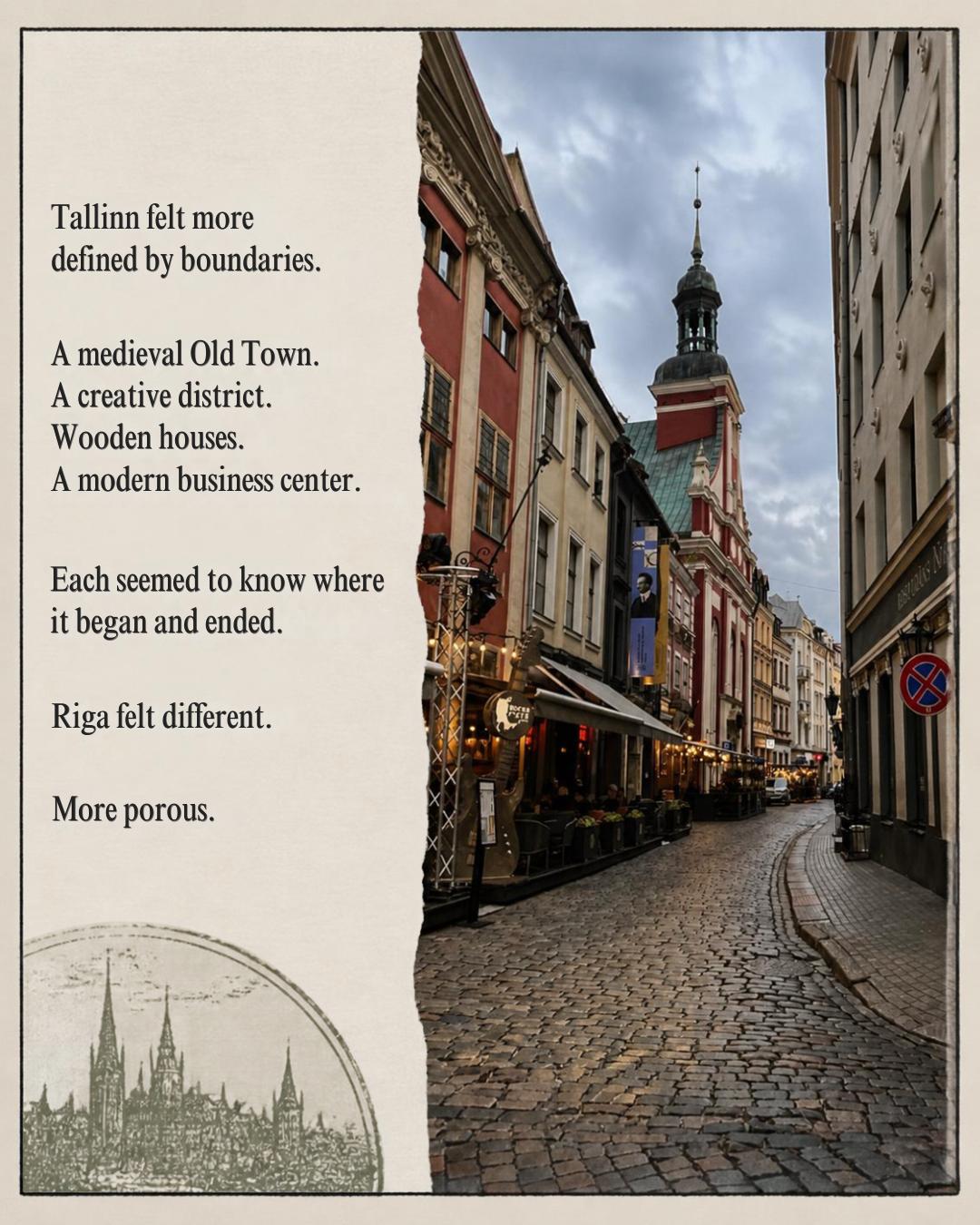
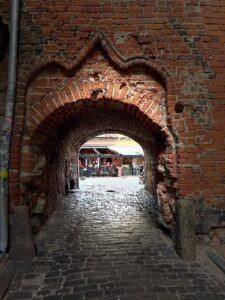
I was curious what question I would be after during my stay in Riga as the bus pierced the forests along a path paved long ago. Hidden, winding cobblestone streets connected squares, then seemed to wind away again, lined with medieval buildings standing beside Art Nouveau and Art Deco designs. The question was not one I needed to answer. It was one I wanted to explore—and perhaps rediscover in myself while experiencing the city.
It was about boundaries, grounding, and change.
Riga isn’t about preserving one fixed identity. It is about remaining a city while repeatedly changing who controls it, who lives there, and what it means to belong there.
Is it possible to stand on our ground while moving ahead?
What if I brought the question closer to home, to the body?
Can we accept the support from our heels while our hips move forward?
Riga’s design approach felt different from Tallinn’s. In Tallinn, neighborhoods seemed to announce their boundaries clearly. The medieval Old Town preserved its medieval character. Telliskivi Creativity Centre transformed old warehouses into galleries, studios, cafés, and creative spaces. The wooden houses of Kalamaja, originally associated with fishermen and workers, defined another colorful neighborhood, while the modern business district marked yet another.
Riga felt more porous.
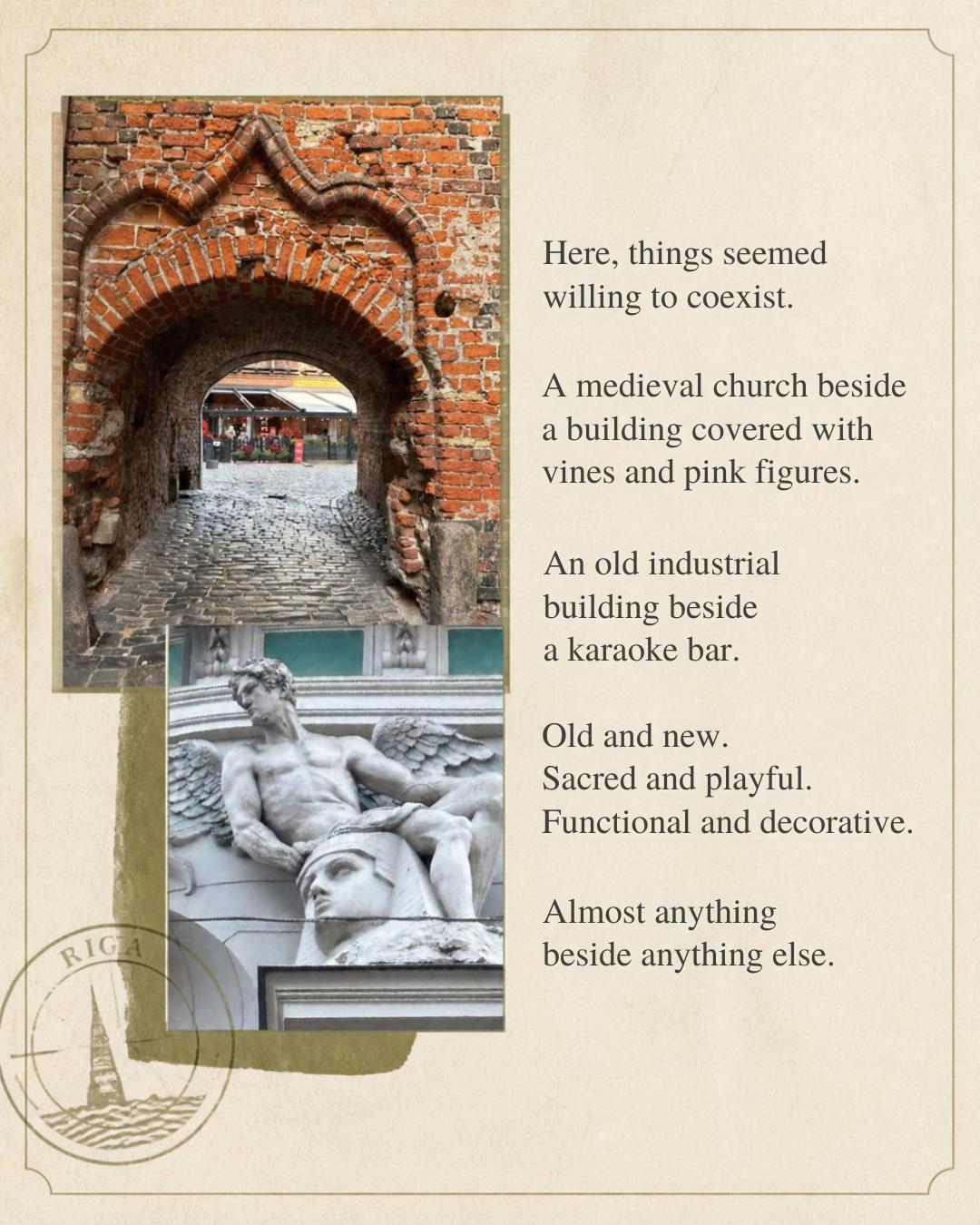
Here, things seemed willing to coexist. An old medieval church could stand beside a building covered with vines and human figures in pink. An old industrial or distillery building could accept a karaoke bar neighbor. The city seemed to say that almost anything could exist beside anything else. But perhaps this wasn’t simply about change. It was about influence.
Something subtler seemed to be running through the city—something that remained unchanged despite the constant rhythm of influences it had been exposed to.
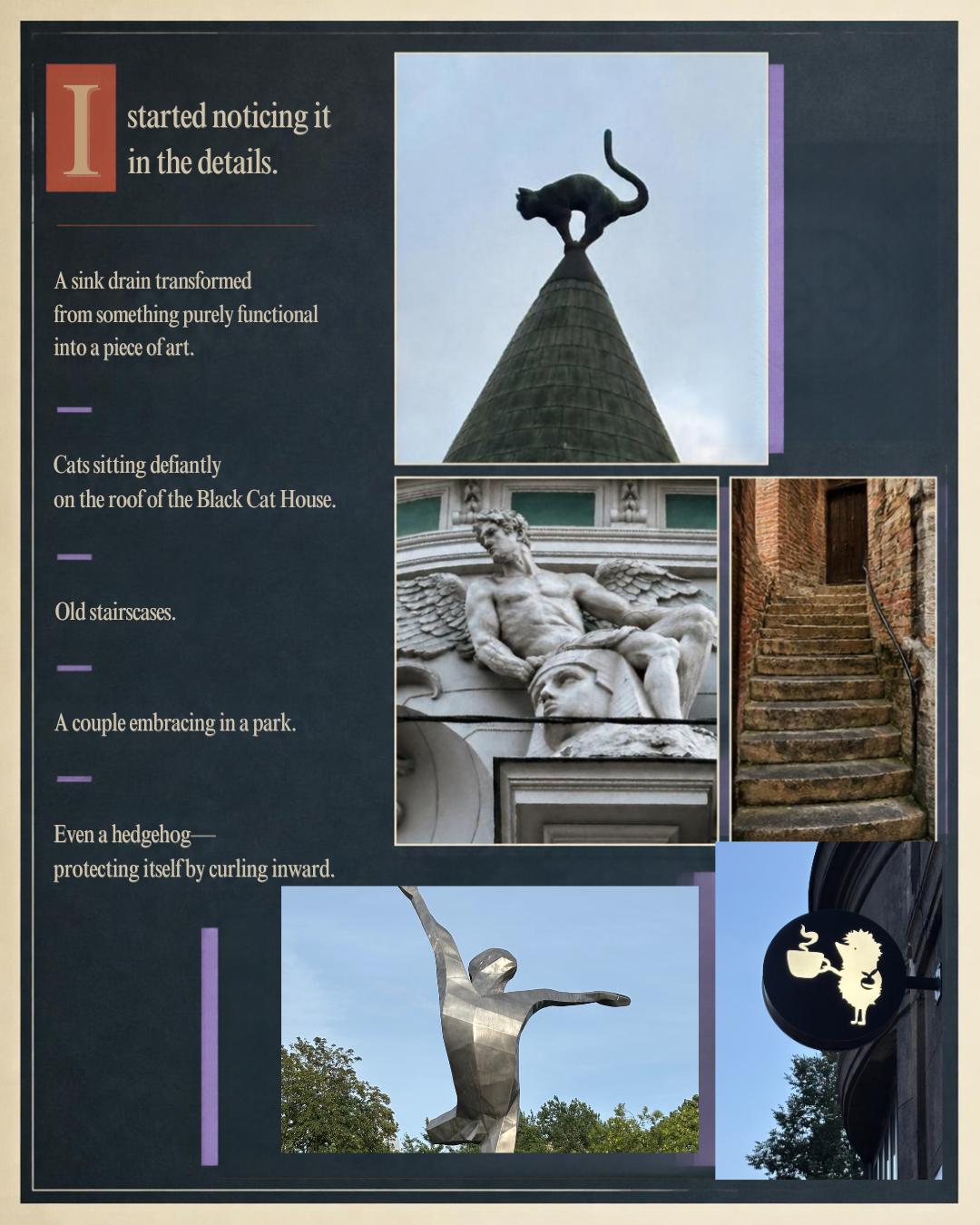
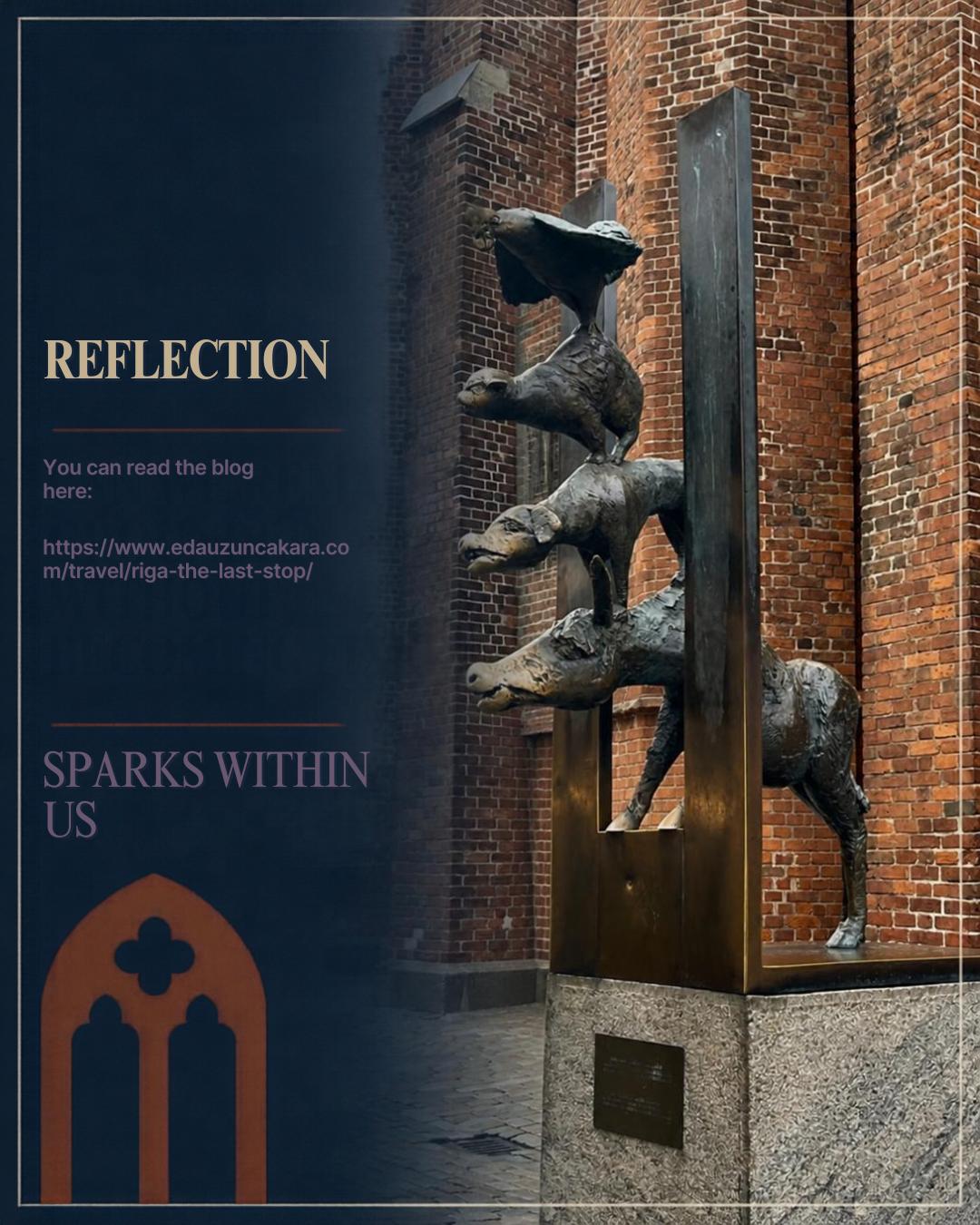
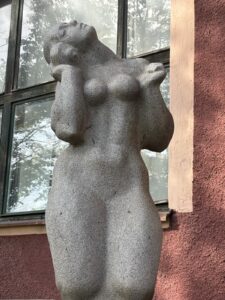
I found it in hidden design details: sink drains transformed from purely functional pieces into works of art. I found it in the determination of the Black Cat House, with its cats perched defiantly on the roof. I found it in the stairs of old buildings and in the sculpture of a doting couple in a park.
Even the hedgehog appeared as a symbol: an animal that protects itself by curling inward.
These details felt like small expressions of something Riga had preserved while everything around it changed.
Riga’s history explains why.
The settlement developed around the Daugava as an important Baltic trading point. In 1201, Riga was formally established under the leadership of the German bishop Albert of Buxhoeveden and grew into a major German-dominated medieval trading city and member of the Hanseatic League.
Over the following centuries, Riga changed hands repeatedly—coming under Polish-Lithuanian, Swedish, and eventually Russian rule.
Under the Russian Empire, particularly during the nineteenth century, Riga grew into a major port and industrial center. Its prosperity helped produce the extraordinary Art Nouveau architecture that still defines parts of the city today.
In 1918, Latvia declared independence, and Riga became its capital. But that independence was interrupted by occupation and war. Riga experienced Soviet occupation, Nazi German occupation during World War II, and then Soviet rule again. Industrialization dramatically transformed the city, as did migration from other parts of the Soviet Union.
In 1991, Latvia regained independence.
Today, Riga carries all these layers at once: medieval, German, Russian imperial, Latvian, Art Nouveau, Nazi-era, Soviet, and contemporary European.
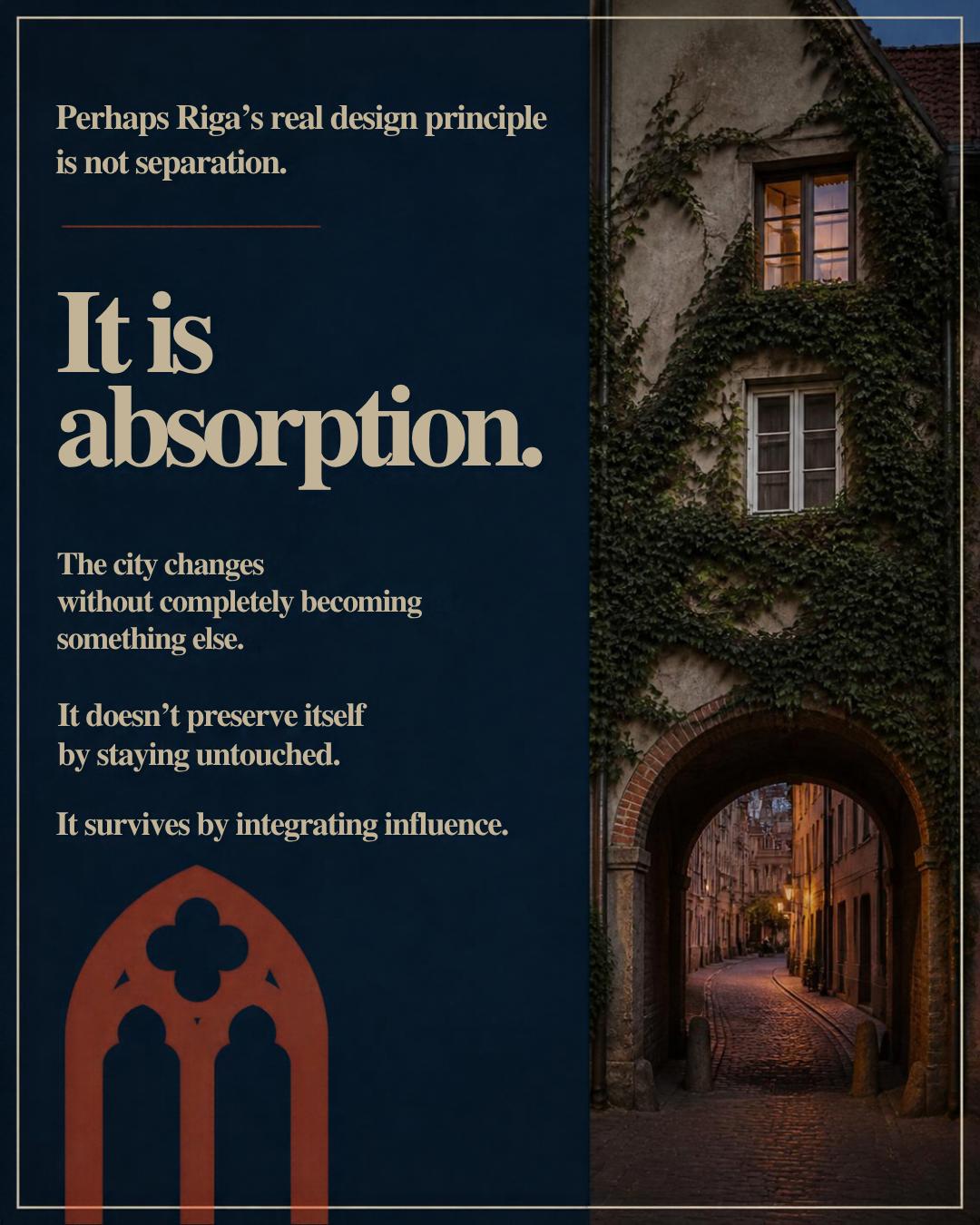
Perhaps that is Riga’s real design principle.
Not separation.
Absorption.
The city changes without completely becoming something else.
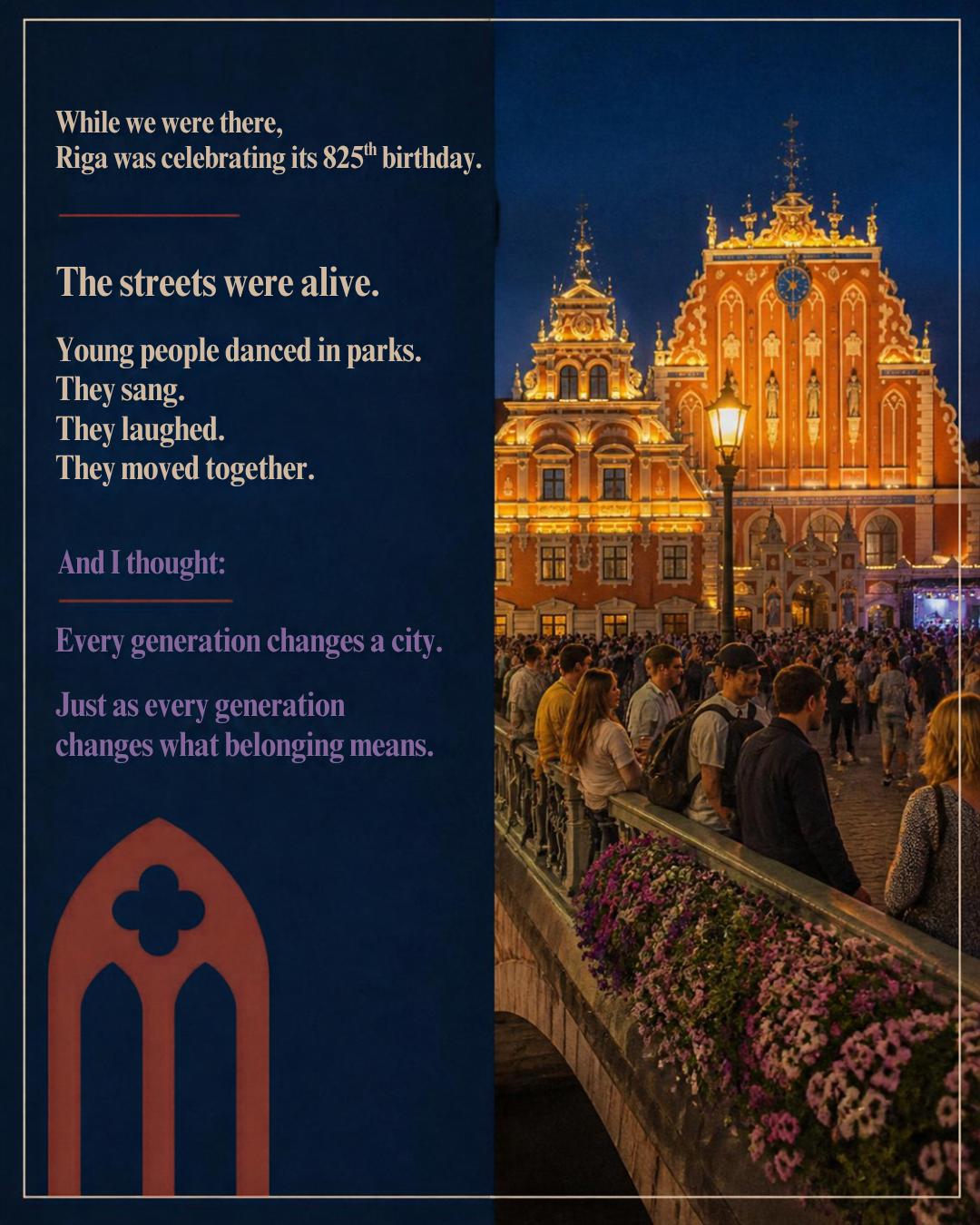
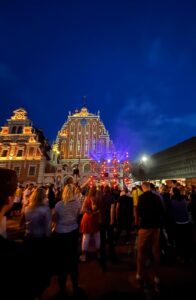
It was almost a coincidence that Riga was celebrating its 825th birthday while we were there. Concerts, performances, workshops, and events filled the city—free and open to everyone, with particular attention to young people.
The streets felt alive.
Young people danced in parks transformed into concert spaces. They sang along, laughed, moved together, and simply enjoyed being there.
Watching them, I thought about how humanity is shaped not only by what we inherit but by what we pass on. Every new generation changes the city, just as every generation changes the meaning of belonging.
Riga was the last destination of our trip, but somehow it felt like a transition rather than an ending.
A transition to many things.
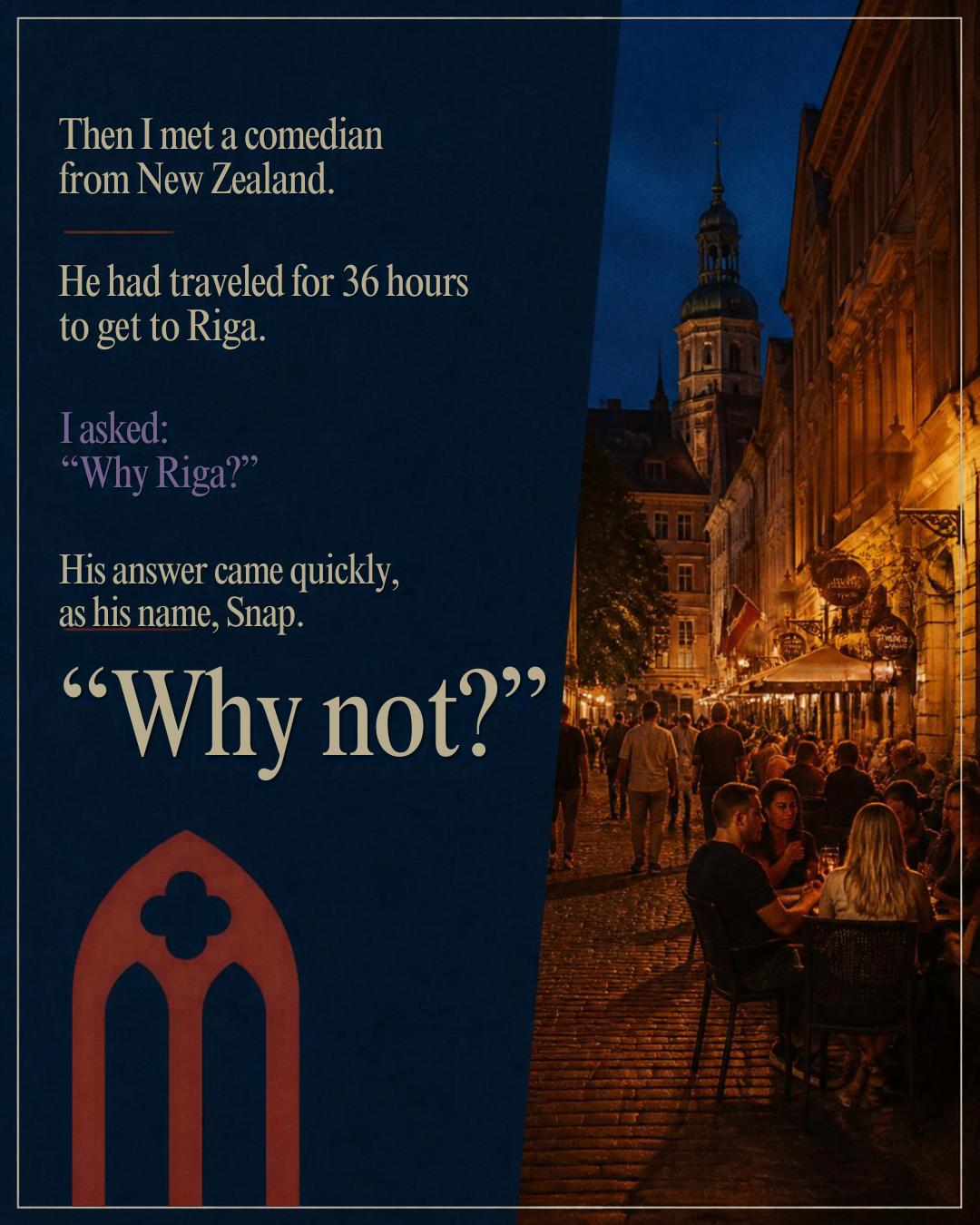
One of them came through a comedian from New Zealand whom we met after his performance at the historic Hamlets theatre. He had traveled for thirty-six hours to get to Riga.
I asked him, “Why Riga?”
His answer came as quickly as his name, Snap.
“Why not?”
“Any other why-nots on your trip?”
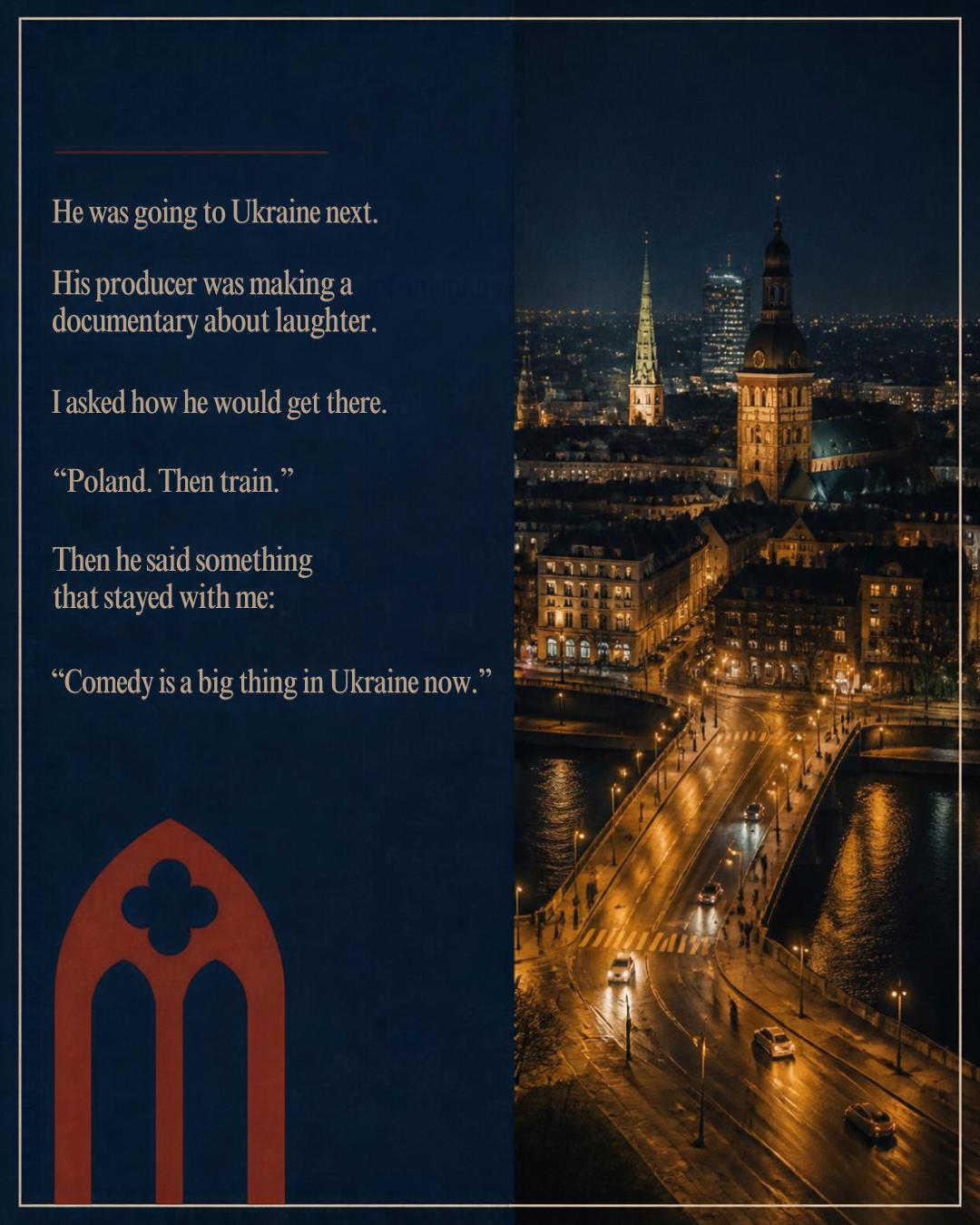
“My producer went to Ukraine to make a documentary. I’m going to join him.”
“How? Isn’t it challenging to get there?”
“There is a way. I’ll go to Poland and then take a train.”
Then he told me something that stayed with me.
“Comedy is a big thing in Ukraine now. The documentary is about laughter.”
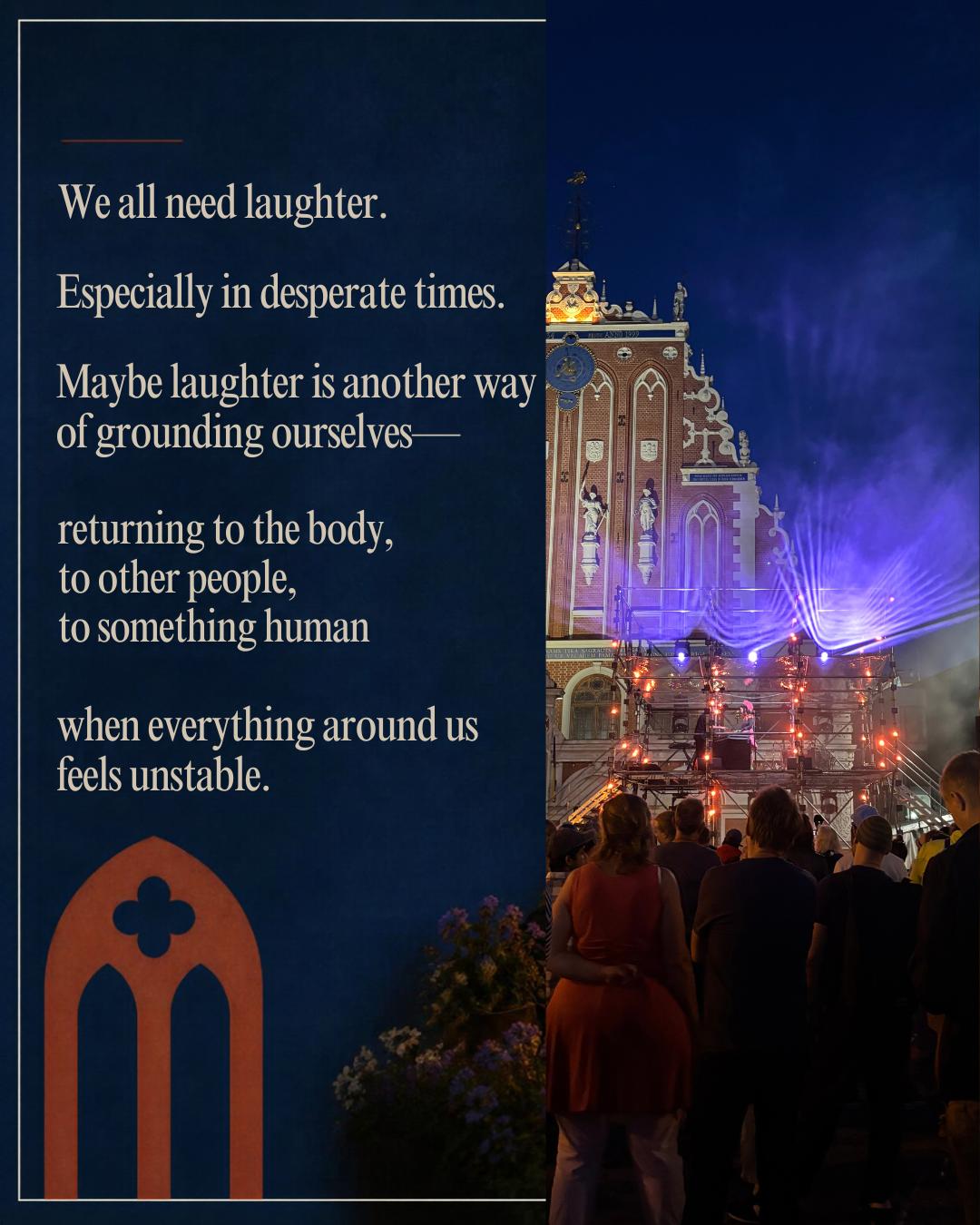
We all need laughter, especially in desperate times.
Perhaps laughter is another way of grounding ourselves—of returning to the body, to other people, to something human when everything around us is unstable.
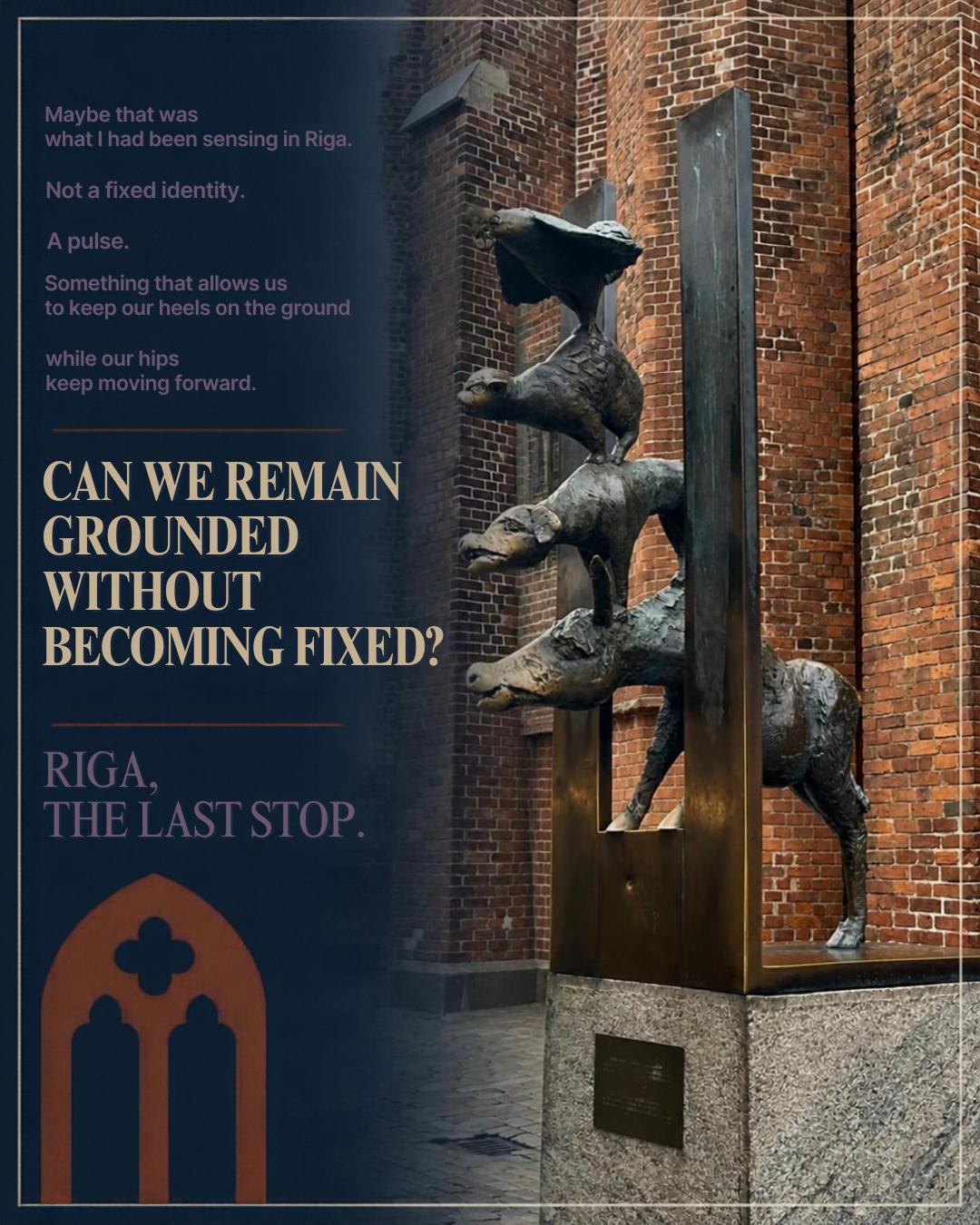
Maybe that was what I had been sensing in Riga all along.
The city had been exposed to centuries of movement, occupation, influence, destruction, rebuilding, and reinvention. Yet something remained.
Not a fixed identity.
A pulse.
Something that allowed the city to keep its heels on the ground while its hips kept moving forward.
And perhaps that is the question Riga left with me:
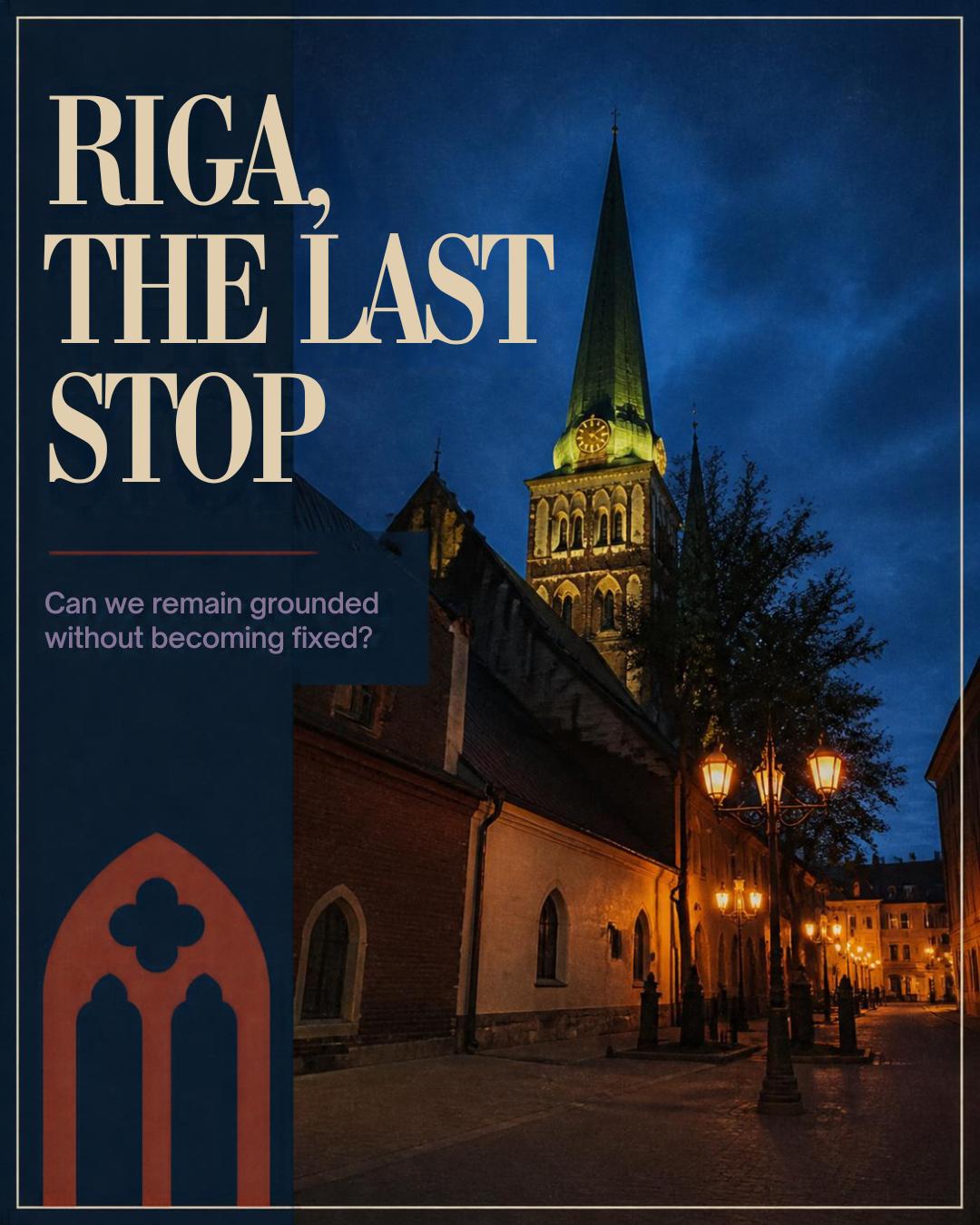
Can we remain grounded without becoming fixed?