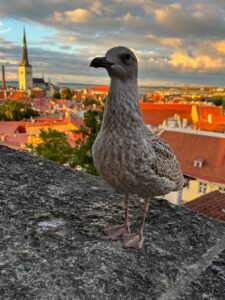
Tallinn, the Second Stop
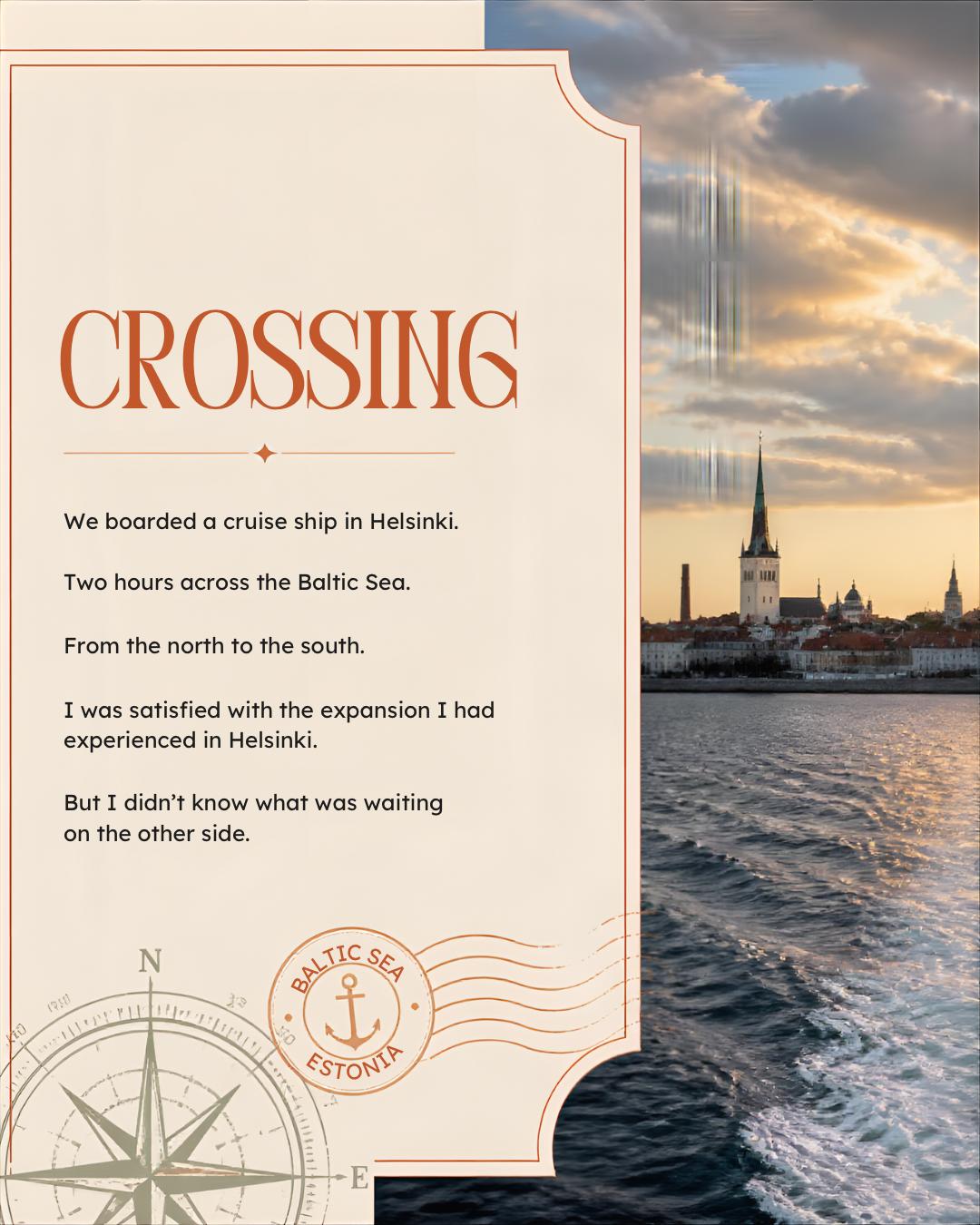
Helsinki was the first leg of our Northern Europe trip. My daughter and I boarded a cruise ship for a two-hour journey from Helsinki; to the south, to Tallinn. I was satisfied with the expansion I had experienced in Helsinki. The repetition of subtle, abstract forms in Finnish design had given me a sense of belonging. Honoring boundaries by becoming part of a larger pattern felt good. But I didn’t know what to expect on the other side of the sea.
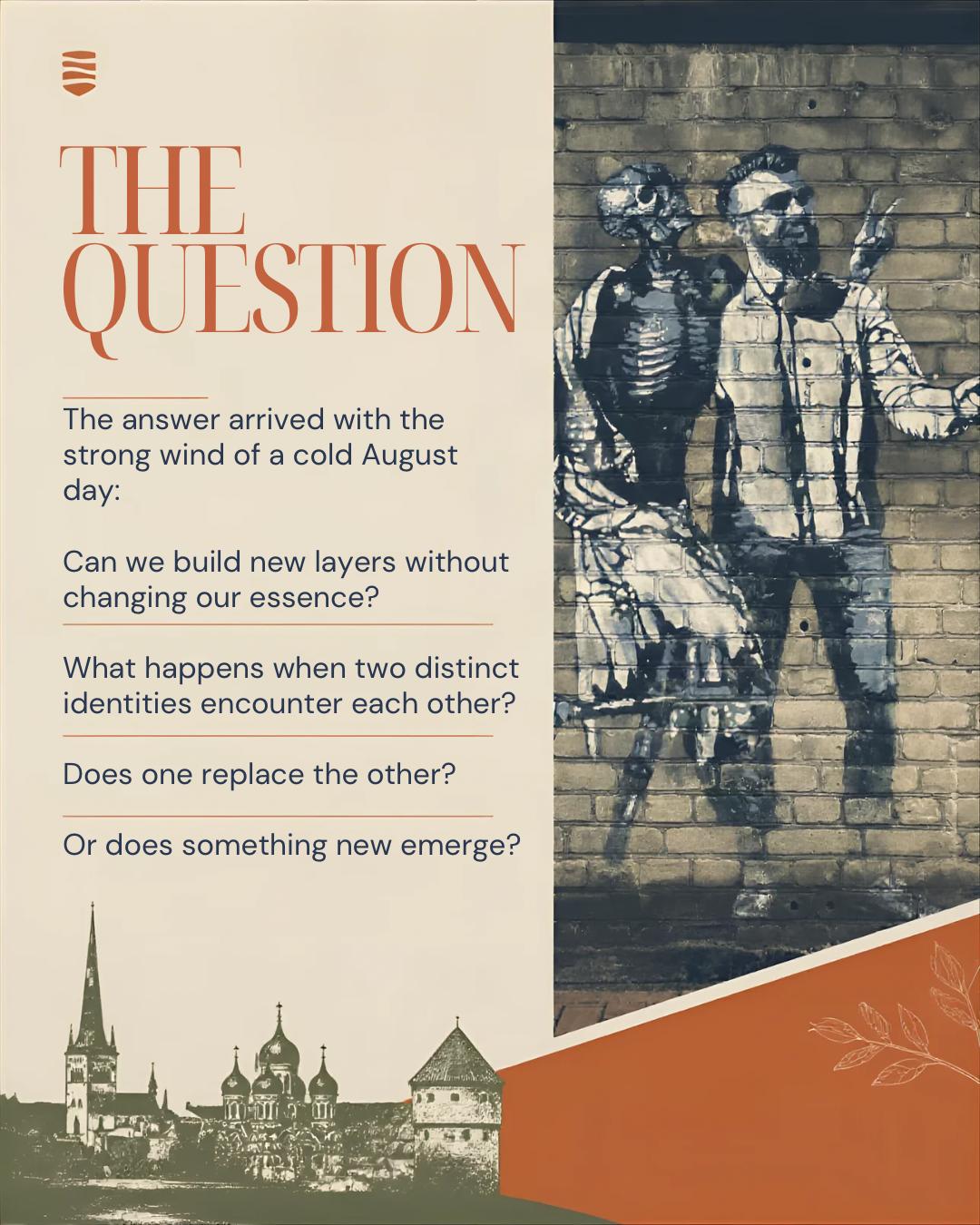
The moment we arrived, the question I would be exploring in Tallinn greeted me with the strong wind of a cold summer day:
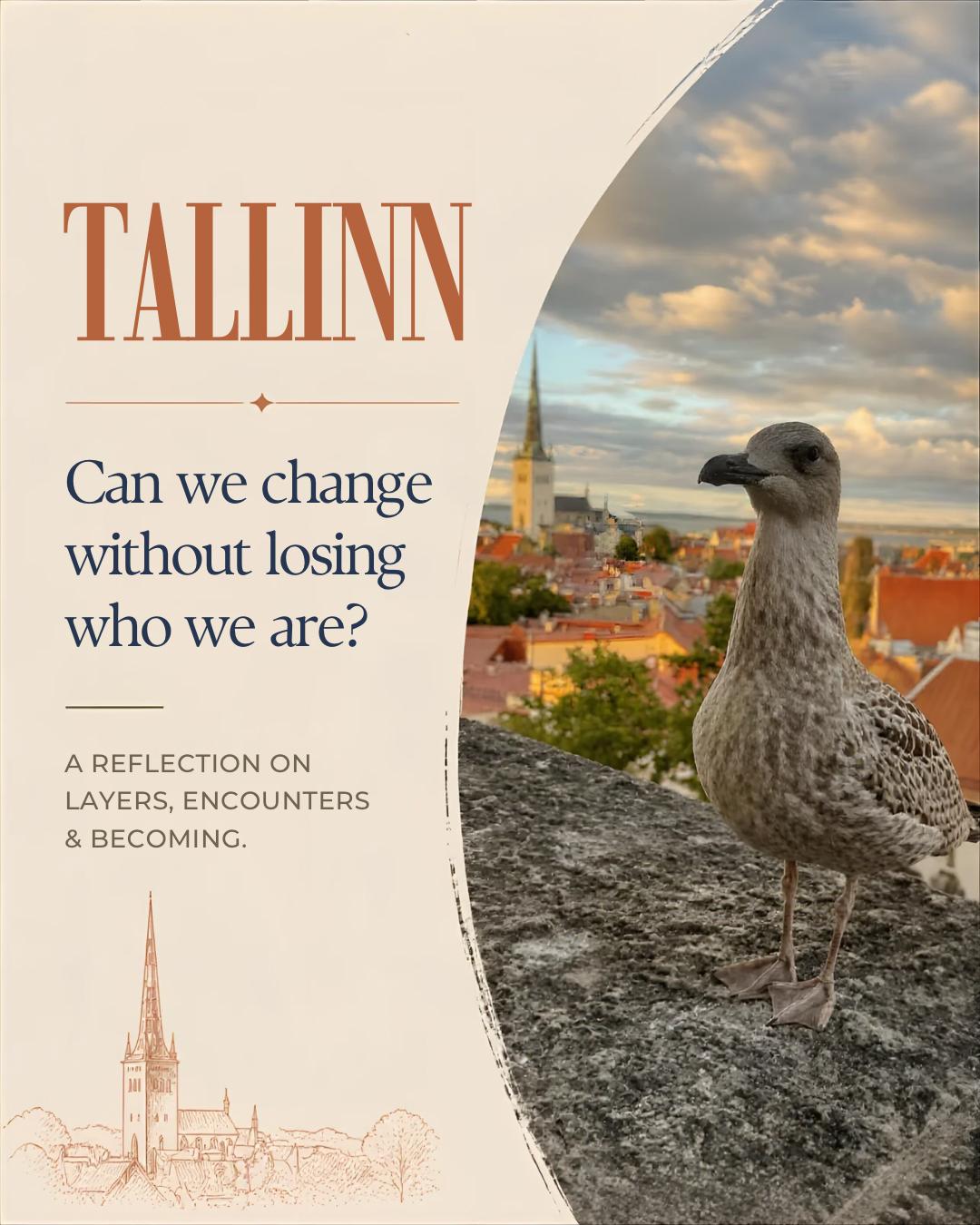
Is it possible to build layers without changing the essence? Is change permanent when two distinct identities or formations encounter one another, regardless of their power structure? Does something new emerge from the encounter, a kind of mutation, that is then carried forward?
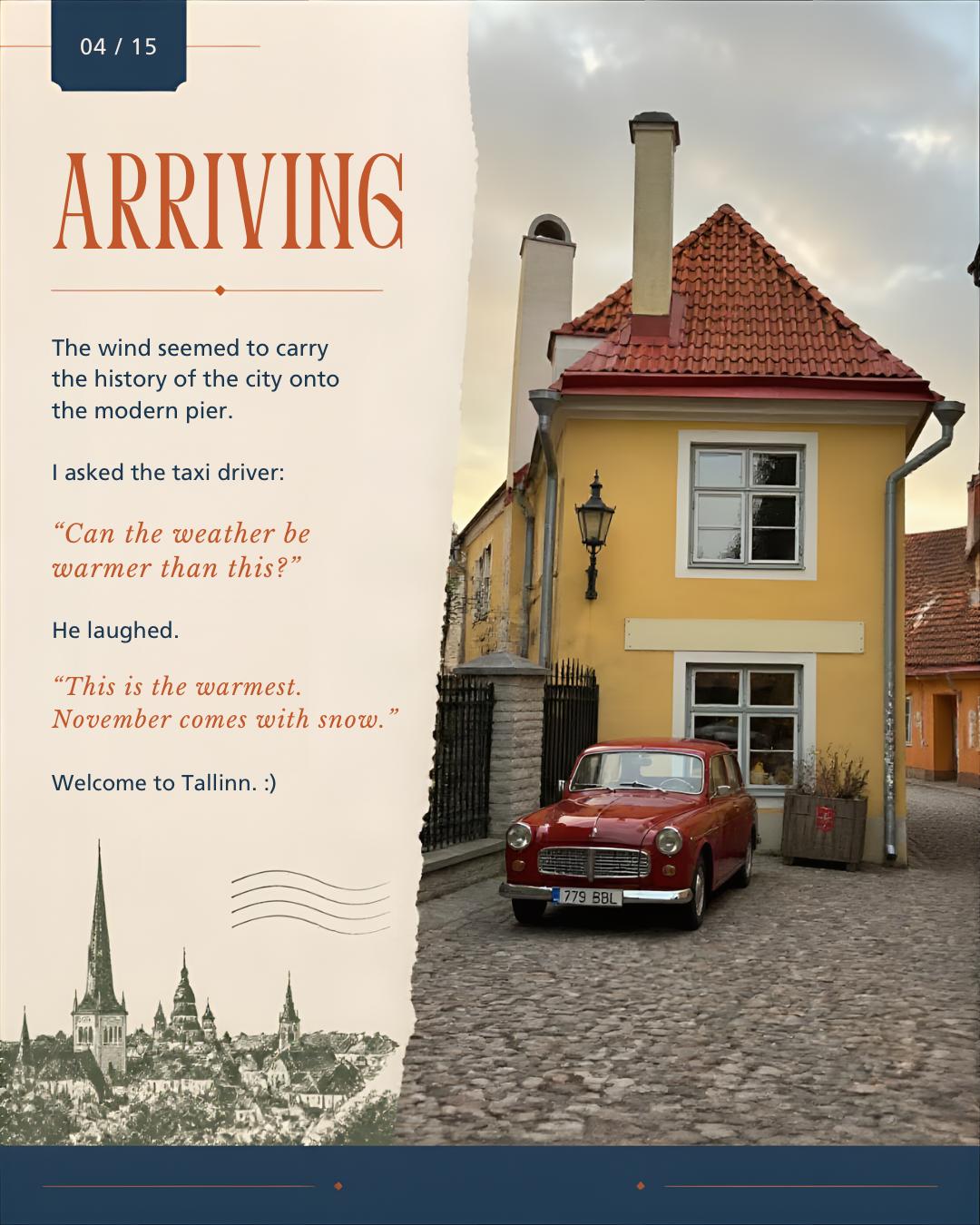
The strong wind seemed to carry the history of the city onto the modern pier.
I asked the taxi driver if the weather could be warmer than this. It was August:)
He laughed. “This is the warmest. November comes with snow.”
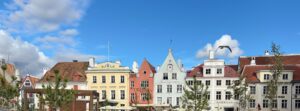
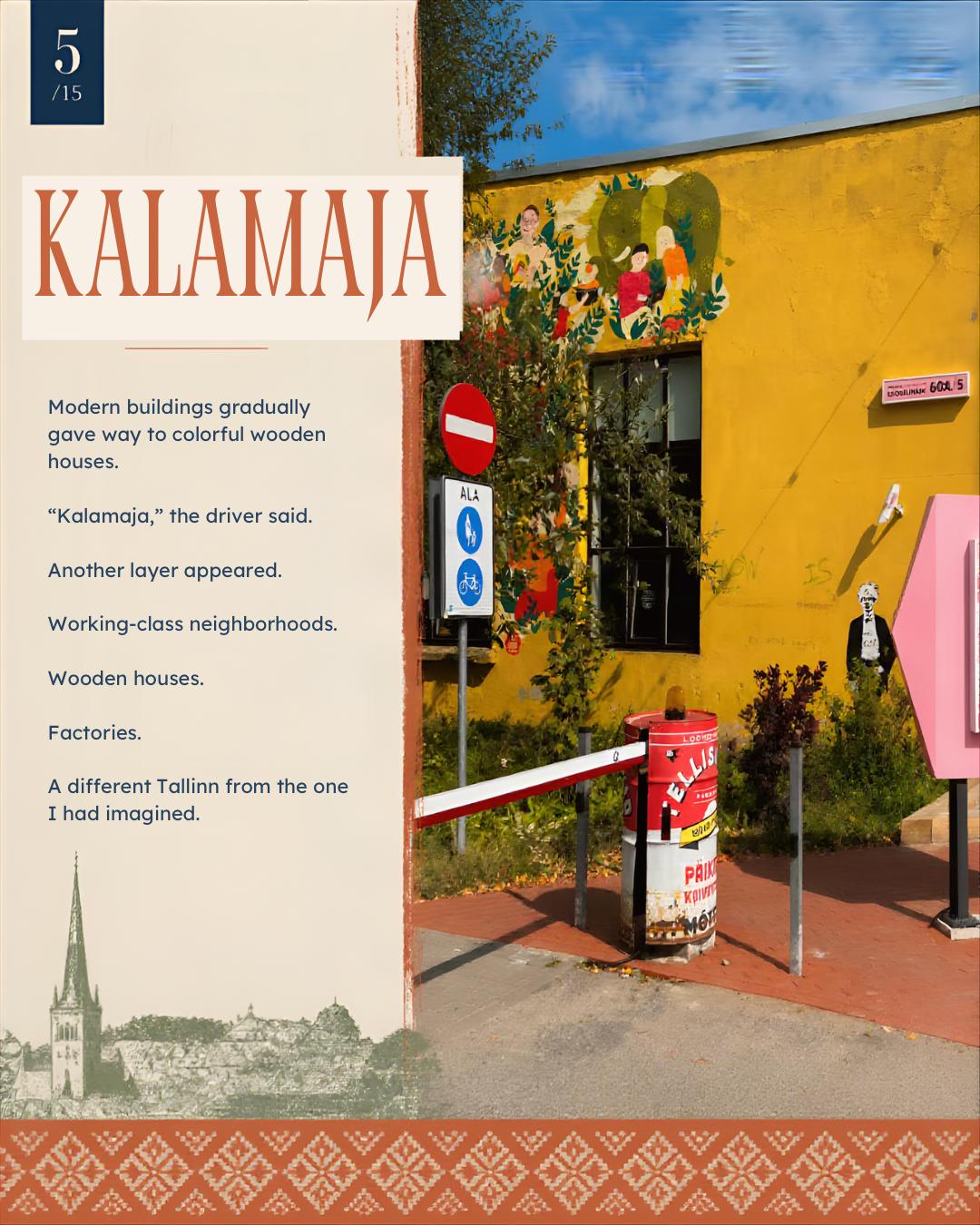
Our taxi navigated through modern buildings toward colorful, cute wooden houses.
“Kalamaja,” he said.
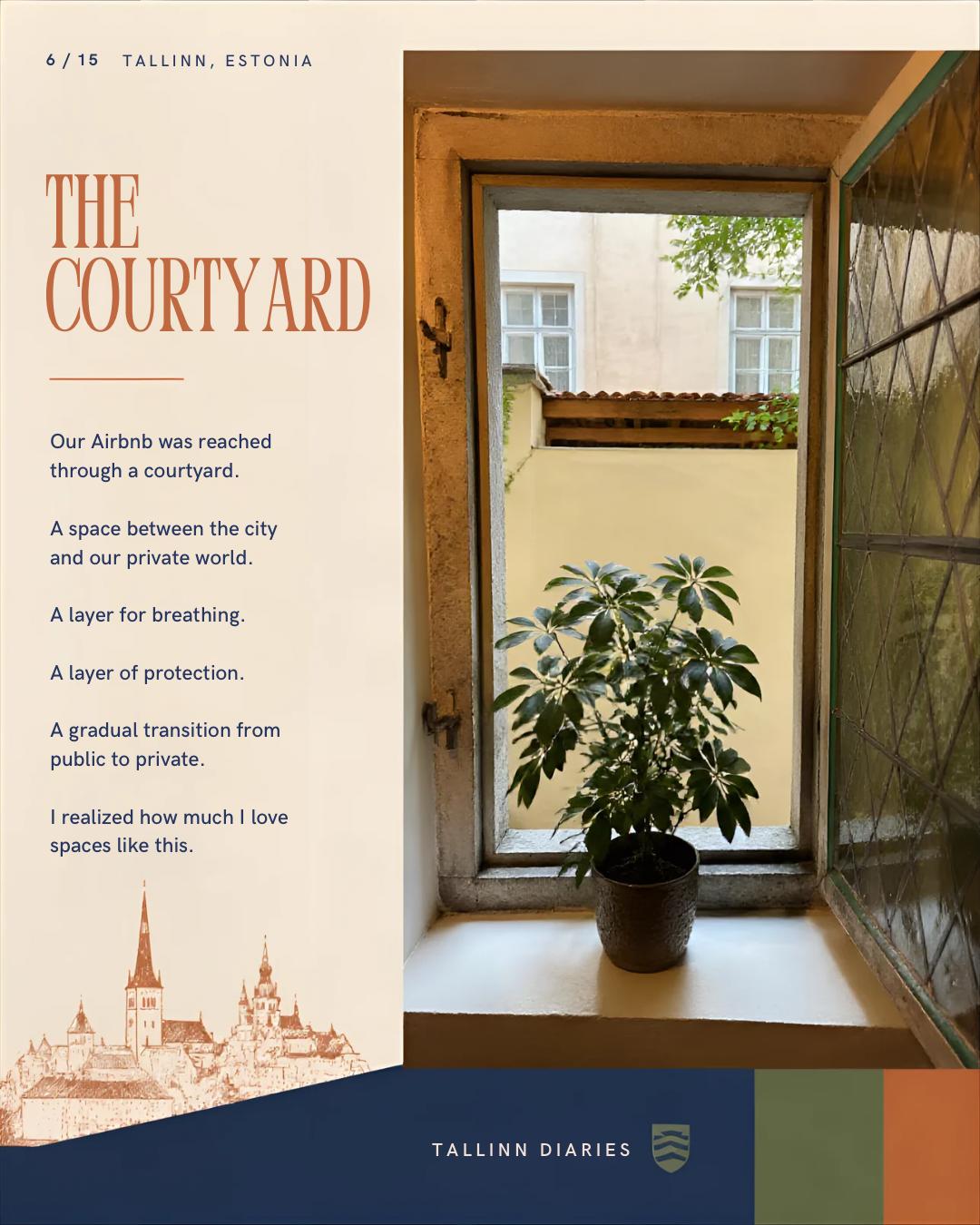
We picked up the keys from a hotel and found our new Airbnb, which would be home during our stay. We entered through a courtyard: a space between the city that had stayed outside and our private space. A layer for breathing. A layer of protection before entering our personal space.
In Tallinn, courtyards historically created space between street-facing merchant houses, shops and workshops and the more private areas within the property. In Helsinki, the apartment where we stayed also had access to a courtyard, although for a different urban purpose: connecting multiple buildings. It reminded me of frontyard-like spaces created in Istanbul, mostly used as parking lots now.
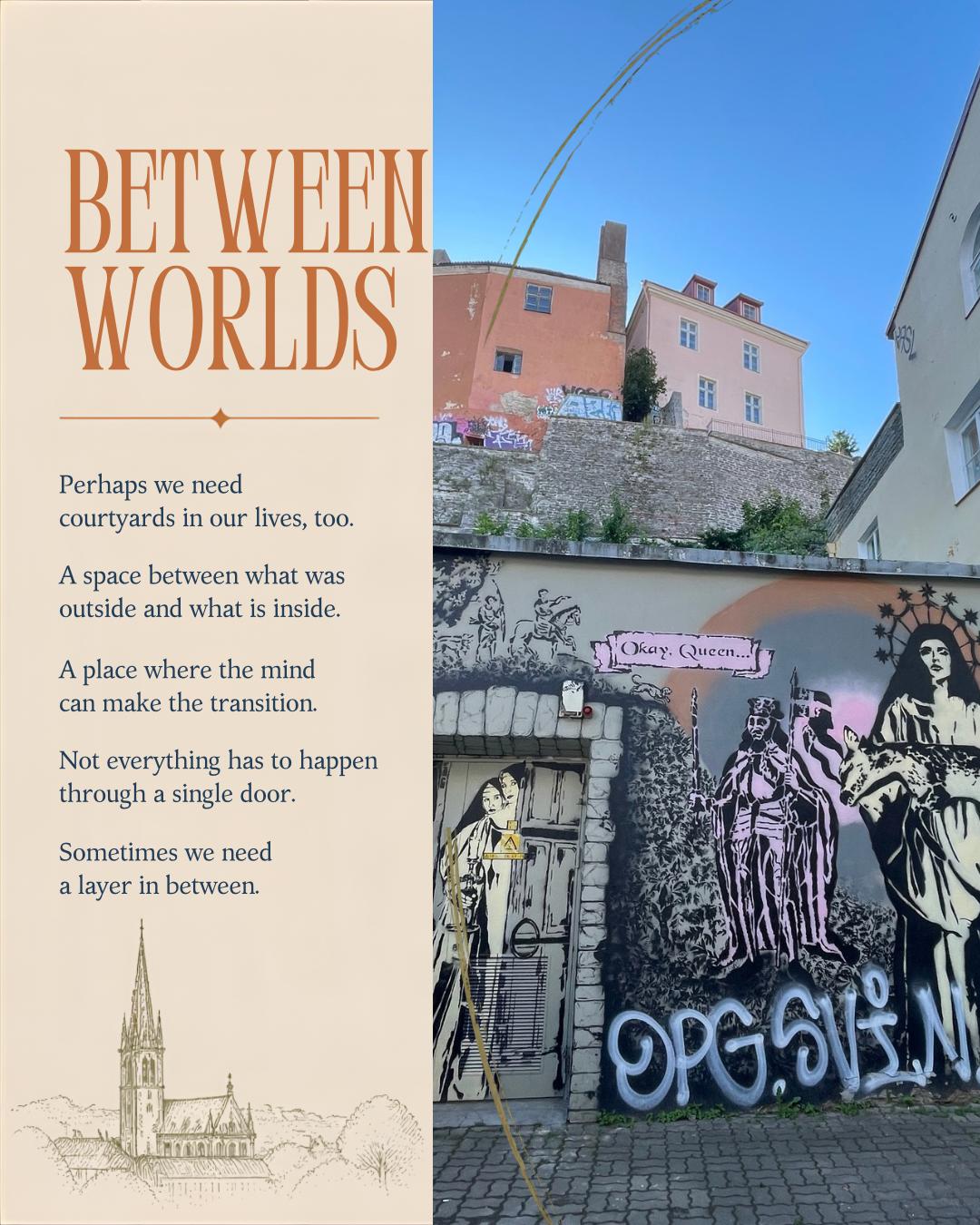
I love the concept of the courtyard. Stepping directly from a busy street into a private home through a single door can feel like too much of a mental transition. I like having an intermediate space—a place where the city gradually becomes home, like a corridor from the main door to the living room where a mental transition can happen at home.
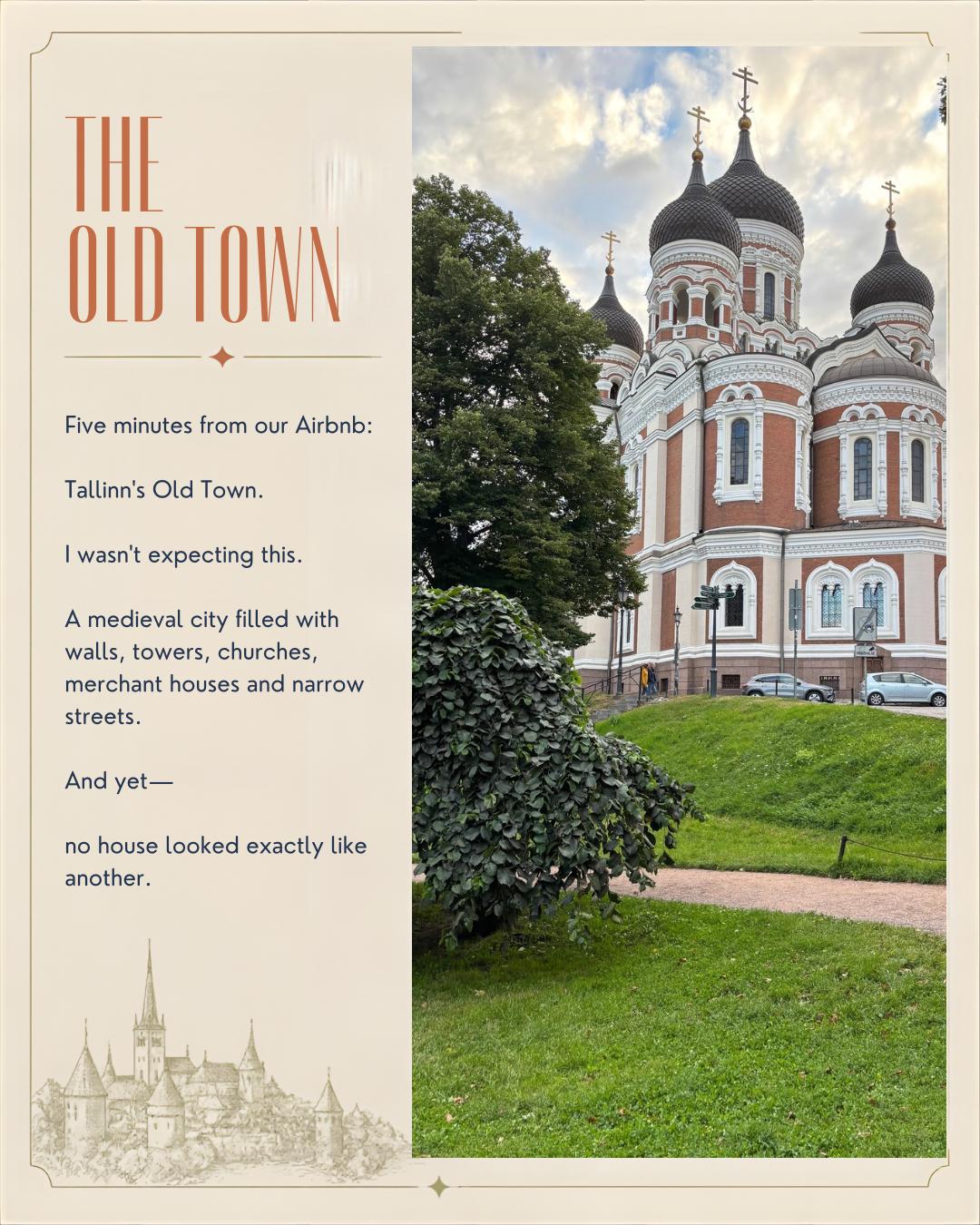
The Old Town was a five-minute walk from our Airbnb.
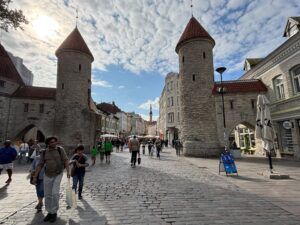
I didn’t know what to expect, but I certainly wasn’t expecting a lively medieval town composed of so many layers.
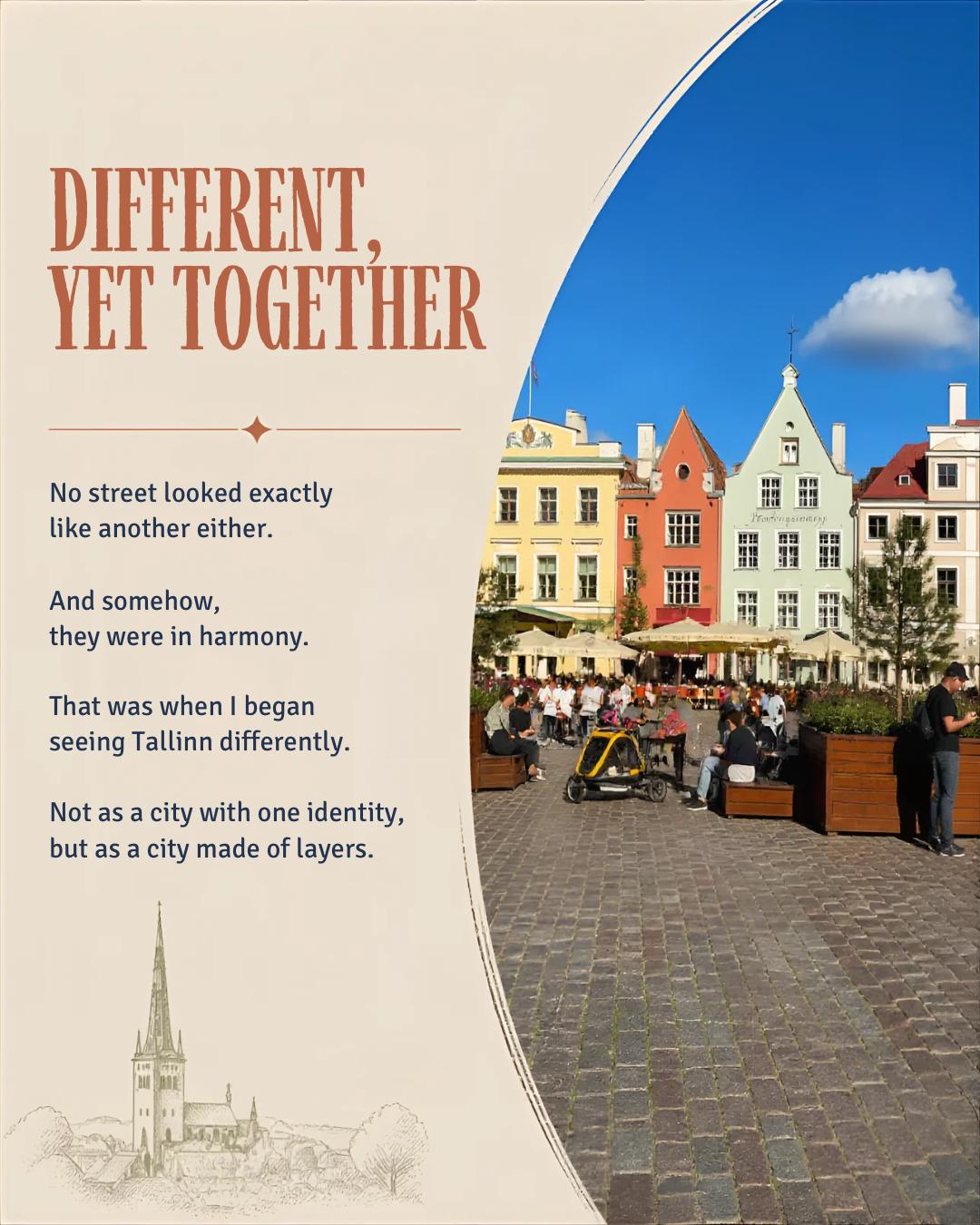
No house looked alike. No street looked alike; and yet, somehow, they were in harmony.
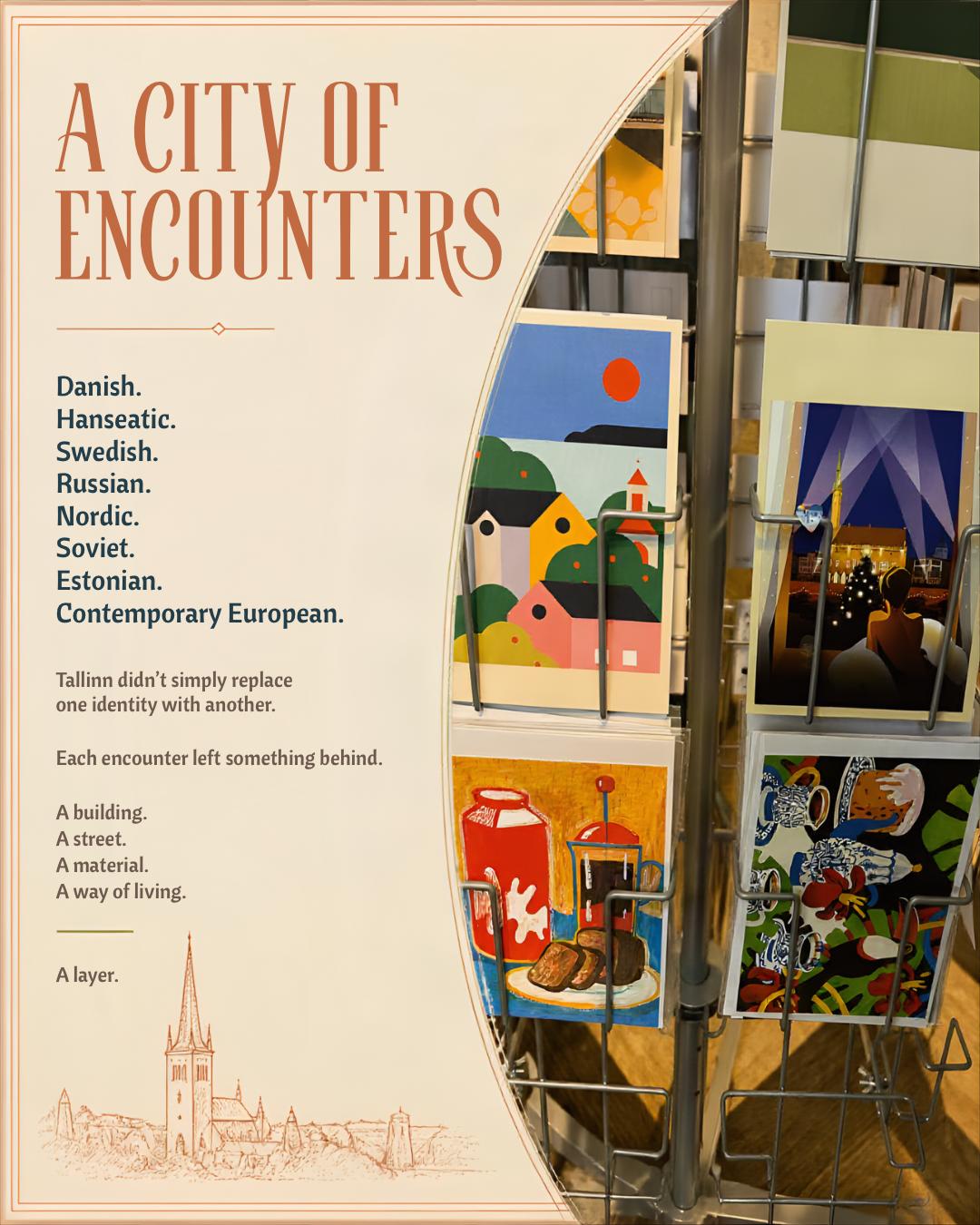
Tallinn’s history can be understood as a story of layers and cultural encounters.
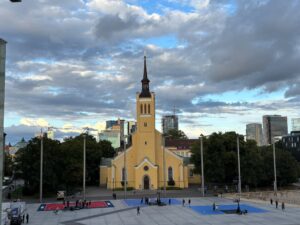
Tallinn began as a local settlement around Toompea Hill and became an important fortified town after Danish forces arrived in the 13th century. During the Middle Ages, it developed into a prosperous Hanseatic trading city, connecting the Baltic region with Scandinavia, Germany and Russia. This period created the medieval Old Town we see today, with its city walls, towers, churches, narrow streets and merchant houses.
In the 16th and 17th centuries, Tallinn experienced the Reformation and Swedish rule, bringing stronger Northern European and Protestant influences. In 1710, the city became part of the Russian Empire, and during the 18th and 19th centuries it expanded beyond its medieval walls, developing Baroque, Neoclassical and Historicist architecture.
Industrialization transformed Tallinn further. Working-class and industrial neighborhoods such as Kalamaja developed, with their distinctive wooden houses and factories. At the beginning of the 20th century, Tallinn was influenced by Finnish and Nordic architecture, particularly Art Nouveau and Functionalism.
After Estonia gained independence in 1918, architecture became a way of expressing a new Estonian national identity. Modernist and Functionalist buildings appeared alongside the older layers of the city.
The Soviet occupation beginning in 1940 brought another transformation. Tallinn acquired monumental Soviet buildings, large residential districts and modernist concrete architecture, while the historic center remained largely intact.
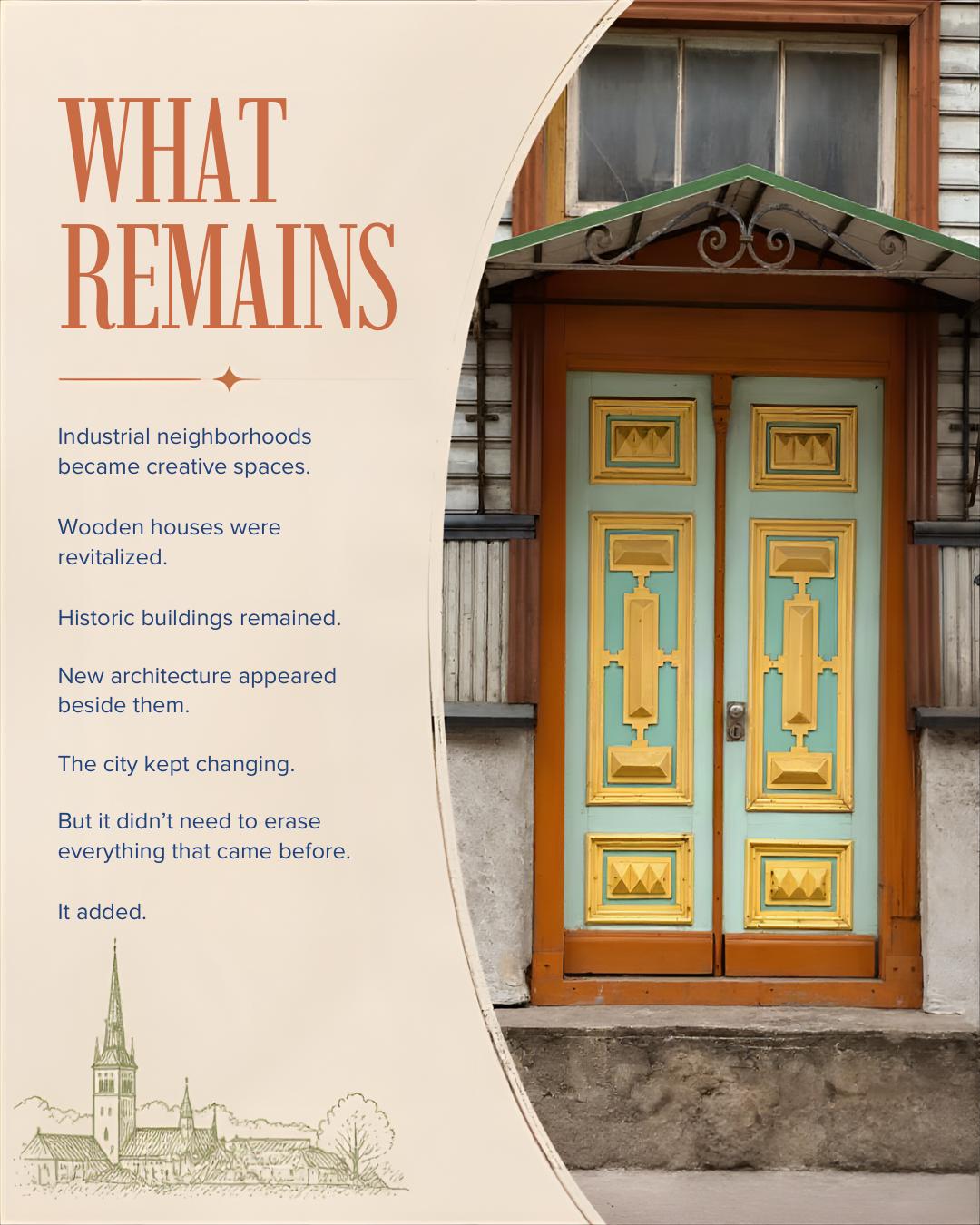
Since Estonia regained independence in 1991, Tallinn has increasingly combined preservation with contemporary design. Old industrial buildings have been transformed into creative spaces, wooden neighborhoods have been revitalized, and new architecture has developed a distinctly Northern European character.
So today, Tallinn is essentially a medieval Baltic city surrounded and interwoven with Swedish, Russian, Nordic, Soviet and contemporary European layers. Its uniqueness comes not from having one architectural style, but from the way these different identities coexist within the same city.
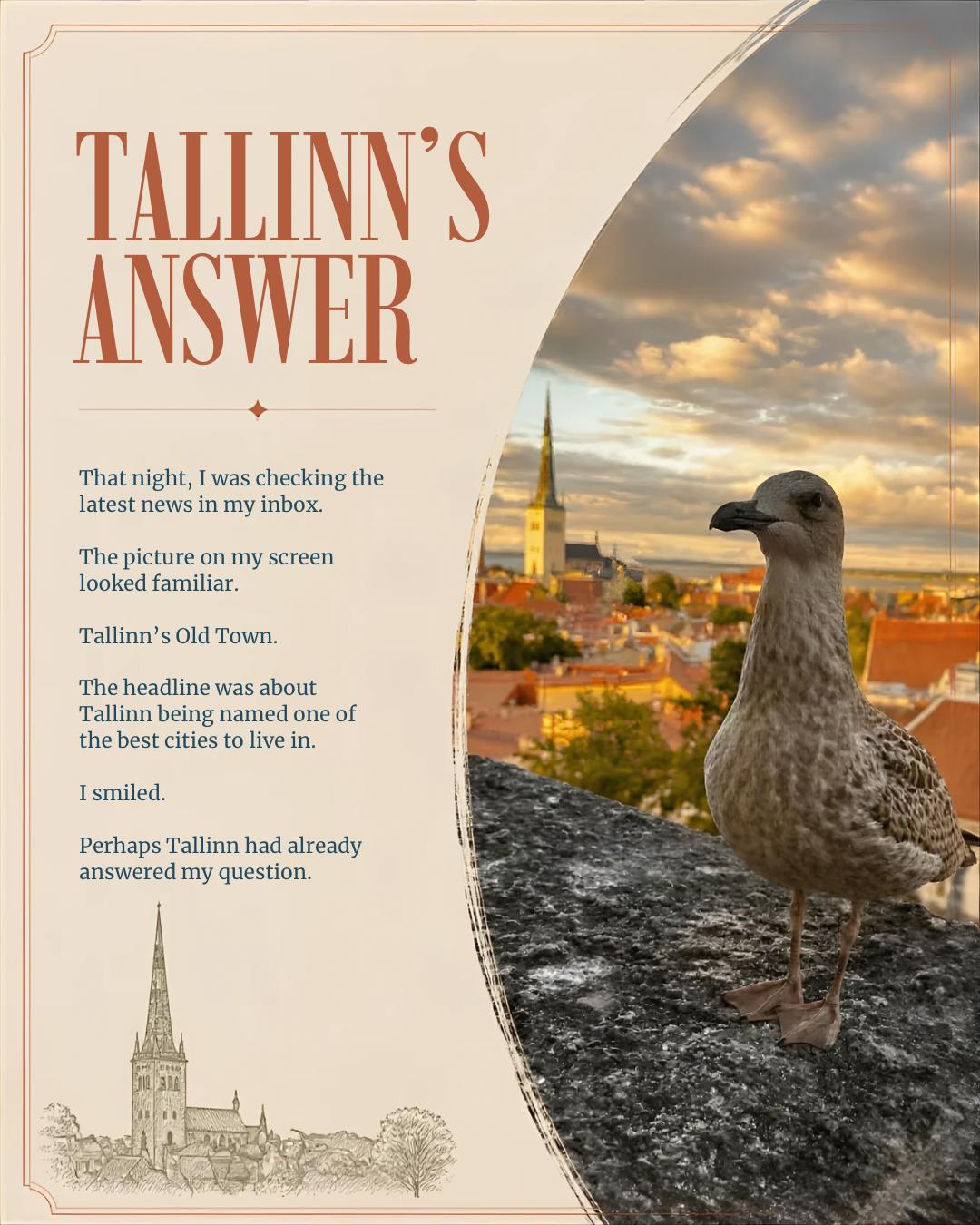
I was checking the latest news dropped in my inbox before going to sleep in Tallinn for the first time. The picture on my screen looked familiar. It was the old town with a headline: Timeout announced the best city to live.
I guess Tallinn answers my question in a way.
Yes, it is possible to change through encounters without simply becoming someone else.
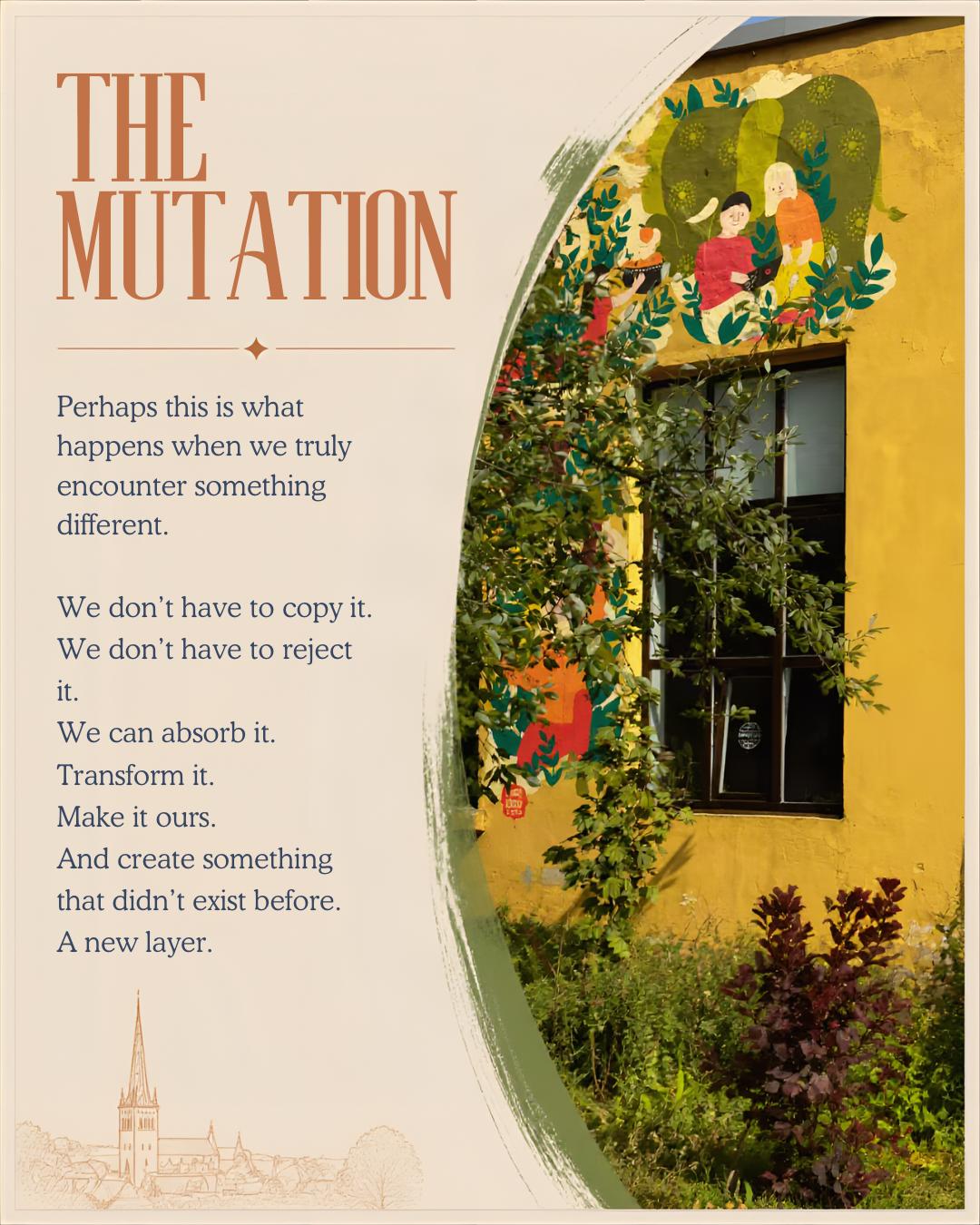
An encounter does not have to be copy-pasting the influence of another. It can mean creating your own version through absorbing and transforming while adding a new layer without erasing what was already there.
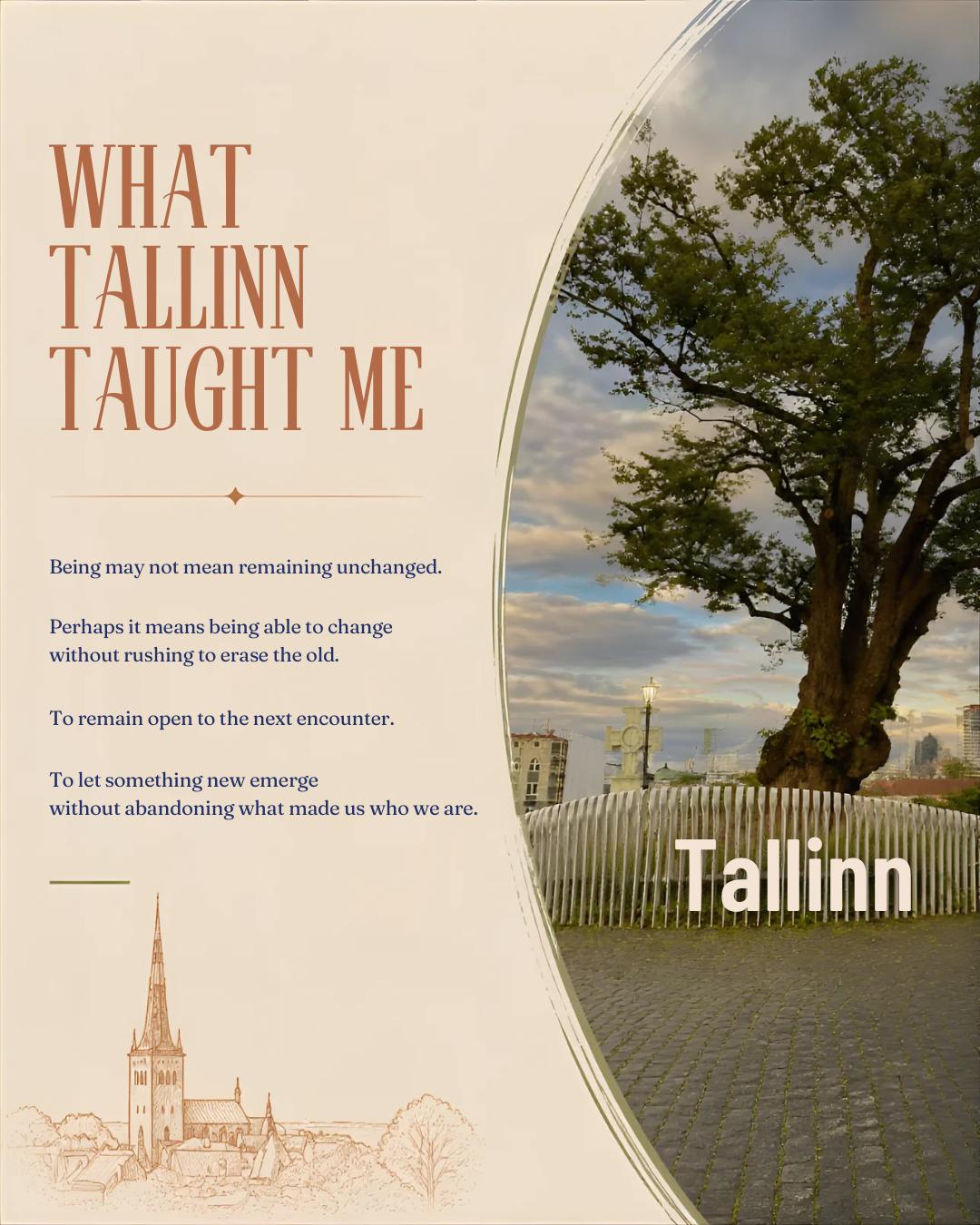
Perhaps being is not about remaining unchanged.
Perhaps it is about being able to change without rushing to erase the old, while remaining open to whatever the next encounter might bring.
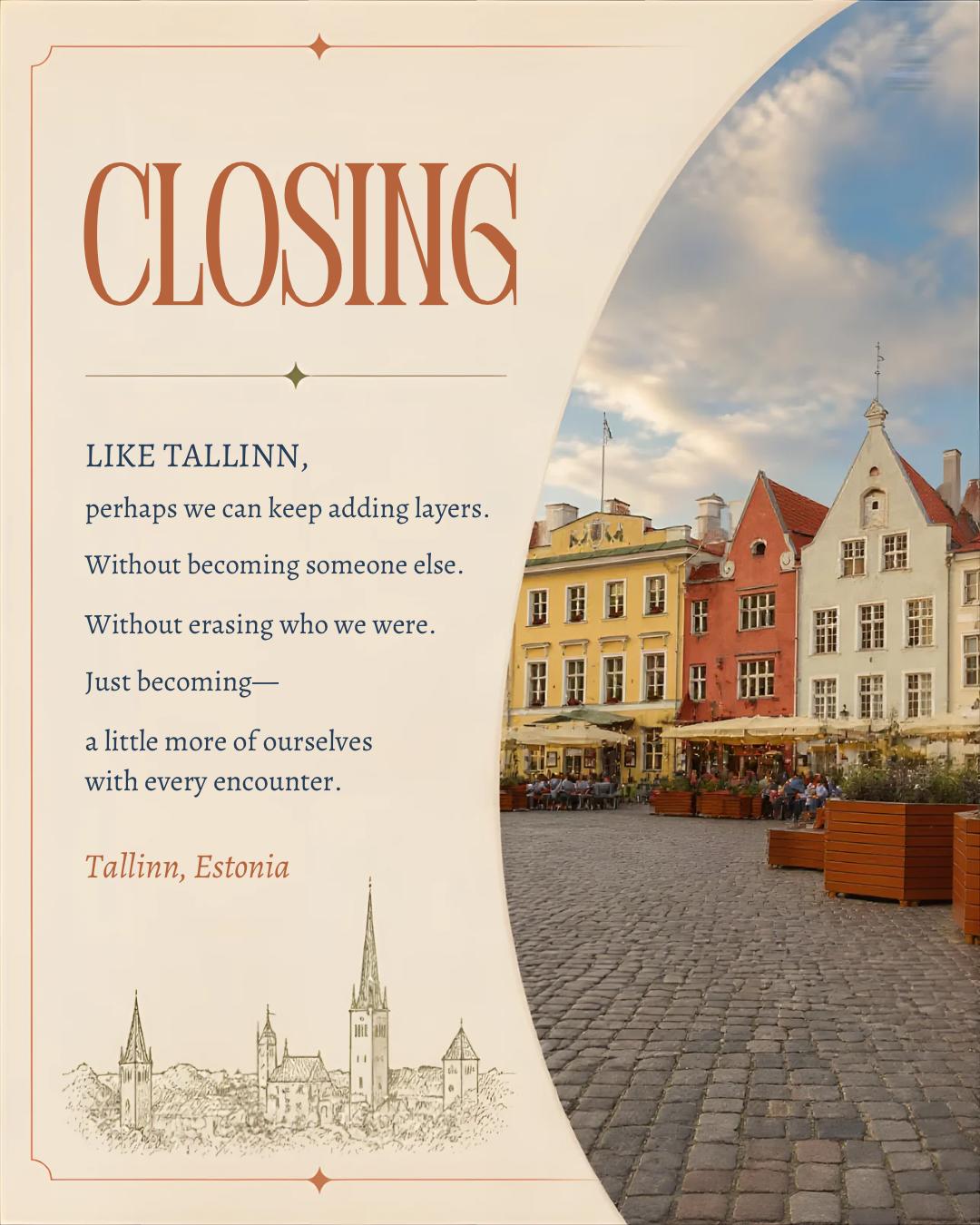
Like Tallinn, perhaps we can keep adding layers.
What stayed with me
The old town:
https://whc.unesco.org/en/list/822/
https://www.visittallinn.ee/eng/visitor/see-do/neighbourhoods/old-town
Telliskivi Creative City:
https://telliskivi.cc/en/
Roterman Quarter:
https://www.visittallinn.ee/eng/visitor/see-do/things-to-do/attractions-museums/177086/rotermann-quarter
Japanese Garden:
https://www.visittallinn.ee/eng/visitor/see-do/things-to-do/attractions-museums/177582/japanese-garden-in-kadriorg-park